William Essex
  • About Us
  • About Me
  • Dear Diary
  • Books (and other stories)
  • This takes you to Medium Dot Com

Thinking outside the latest restrictions

23/9/2020

 
Watching the two of them in the Commons at lunchtime yesterday, I thought: Kier is Boris's kryptonite.

Watching the broadcast last night, I thought: the virus will still be there waiting for us when we come out after another six months.

Whether or not we comply with this current set of restrictions - whether the small minority are cowed by the threat of a big, bad fine - I came away thinking: this sounds remarkably like government by kicking the can down the road.

Yes, yes, I know what happens when the R number goes above one. Could you talk to me instead about how easy, or not, it is to develop a vaccine? What is government going to be doing during the next six months? Say something positive about how you'll be innovating, working with scientists, rethinking The Economy for a world in which we live apart.

Won't technology solve all our problems this time? Can't we harness the power of the newly unemployed towards some kind of New Deal investment in finding a cure - or even just testing for infection?

Is Covid-19 here to stay?

If so, we need new thinking on how to live.

Same old same aargh!

20/9/2020

 
These days, the story is told simultaneously. Nurses care for Covid patients, and they're written up as heroes before their shift ends.

Which is fair enough, given that they get clapped rather than paid a New Normal/New Economy wage.

But then some large brain-dead organisation puts the story ahead of the facts. We've got billions of tests happening every hour, the government tells us as we queue at the test centre.

Or click away helplessly, trying to book a test.

The Covid story is that it goes away. We defend ourselves mightily against the threat of a second wave, using all the "world-beating" blah-blah that the prime minister was waving his arms about, and - wait for it - the war will be over by Christmas.

The virus, I mean. Not the war. It's a staple of any war story that everybody thinks it'll be over by Christmas and it never is. But this is different. This is the virus and, er, it'll be over by Christmas.

Which is lucky, if you think about it. Nothing's actually happened to the virus. Nobody's shot it with a tranquilliser dart, or told it "Shoo!" It's the same old virus that was killing us back in March. Mutated a bit, maybe, easier to catch - but recognisably the same.

We're lucky that we can just tell the story of how it will go away by Christmas - and it will go away.

I mean - imagine if we had to do something to make it go away. Imagine that all the targets and the media briefings and the prime-ministerial blathering weren't enough.

What then?

Tall dark strangers

9/9/2020

 
Every time we think we've reached an understanding of how the world works, sooner or later we're proved wrong. And yet every time, we act as though we're right.

Do we learn more easily (if at all) from past experience, or from new information?

Past experience is always: you thought you were right, but you were wrong.

New information is always: this fits the facts as we (think we) know them.

I think we're F-worded. I'd put that more clearly, but as a friend once told me and I remembered, I'm "ridiculously squeamish about odd things".

There's a glacier, apparently, that's melting faster than we were all confidently predicting.

The other evening, I turned on the radio to hear a man's voice say that he had learned never to reject anything out of hand. They were discussing astrology, and he went on to suggest that maybe the movements of the planets and our destinies are both influenced by some third factor as yet unknown.

He wasn't defending astrology, but leaving open a possibility. I like that attitude.

Presents!

8/9/2020

 
Let me get this straight.

The rate of infections is rising. More people are catching the virus. Lockdowns are coming back.

But the death rate isn't rising.

Either the virus is becoming more survivable, or people with more effective immune systems are catching it.

If younger people are catching it, at universities or illegal raves or demonstrations or wherever, and surviving it because that's what they do, then this second wave will soon be followed by a third wave.

Young people go home for Christmas, don't they? Share cosy present-opening sessions with their elderly relatives. Get hugged a lot. Kissed goodnight, even.

...and a Happy New Year.

O "temporarily", o mores!

4/9/2020

 
Letter from the bank, printed letter, to explain that they would soon be applying an upgrade to their online-banking systems and that therefore their online-banking systems would soon become unavailable.

Temporarily. They did say "temporarily". But an inconvenient line-break made the letter almost perfect. In old-fashioned newspaper language, the word "temporarily" was below the fold.

Regulars here will know that I have been applying an upgrade to my habit of posting every Friday. In the sense that I no longer post every Friday. I've been otherwise engaged - but more of that later.

We see what we want to see, and I saw everything except the word "temporarily" in that letter from the bank. I'm not sure whether the technical term is "confirmation bias", but I got a real buzz from the surreal but realistic (sic) admission in advance that the upgrade would be a disaster.
 
As they so often are, right? I don't think that's exactly what the bank was trying to get across, but I wonder whether I'm the only customer who read the letter and headed straight to the ATM.

Scientish advice

29/8/2020

 
Of course the government's scientific advisory group has a cute acronym, and of course there's a "Shadow SAGE" to disagree with it. As far back as that film about Moses starring Burt Lancaster (1975-ish), I remember being irritated that the principal bearded American was followed around by another bearded American whose entire job was to disagree with everything Burt said.

Or maybe it was that earlier film with Charlton Heston. The Ten Commandments, was it? 1956?

Just for once, let's be told to do something that we're not told a week later is pointless. A scientish came on the news this morning - I like "scientish"; mistype, but I'll leave it - to declare that mask-wearing may be ineffective against covid-19.

"May" is another "could" word. Covid-19 "may" get through masks. The virus "could" still get to you through your mask.

Thanks.
Engage brain before...

28/8/2020

 
Curious how the human world redesigns itself without official permission.

The government makes a noise about getting people back to work. Shortly afterwards, we discover that employers are as happy with home working as their employees.

"I'm not putting my team through public transport," said the head of a small firm. All the having-an-office money can be redirected into staff training, she told her interviewer. And they didn't (couldn't?) find a follow-up somebody to burble about the joy of offices. The balance tips.

All the commentary starts from the status quo. "The High Street" will suffer from the lack of commuter traffic. "The airline industry" needs support to tide it over - because how it was is how it will be, right? No wonder we don't innovate. "The old normal" is the standard, if not quite the ideal.

In The Socialist Case (1937) the politician Douglas Jay wrote, "In the case of nutrition and health, just as in the case of education, the gentleman in Whitehall really does know better what is good for people than the people know themselves."

Discuss with reference to that algorithm. In education today, we are presented with the binary choice between keeping children at home and sending them back to old-style classrooms. With masks, social distancing and lots of school rules, yes - but that's it. Months to think about it, and - that's it.

The measure of the government's ability to adapt to circumstances is that algorithm.

Look at adult education, where there aren't classrooms in quite the same way. Online courses, TED talks, interactive seminars on Facebook and elsewhere, books to download, any amount of written work, video, source material generally. Online courses in how to teach online courses. And in how to incentivise students.

Take groups of children out of the classroom and socially distance them in large empty office spaces where they can interact with online teaching. For example. With age-appropriate incentives to stay the course.

For example. If not that, you know, maybe come up with something else?

​The brief is "educate children", isn't it, not "force children into classrooms"?

Lesson learned 2

13/8/2020

 
Further to my last, see below, technology seems sometimes to confer an immunity to human feeling.

Just heard another interview about A level results. In one school, one child got an E last year. But this year, the estimated grades were all above E.

So the algorithm downgraded them all to make the lowest grade an E.

The interviewed person went on about how wonderful it all was, how "incredibly" hard everybody was working, and how "complex" the challenge was, of taking teachers' estimates of how the pupils they'd been teaching for years would do - and changing them to something else based on a belief (I guess, see below) that teachers can't be trusted.

The interviewed person ended up confirming that if the young woman appealed, she'd be pretty certain to get a grade based on her ability rather than some cheap algorithm's statistical need for somebody to get an E grade.

The young woman, who also spoke, sounded worried. I turned off the radio and thought about the statistics for anxiety and depression among female teenagers, and about how long it takes for an appeal process to work.

Ofqual, pronounced Off-Qual, is The Office of Qualifications and Examinations Regulation. Off-Kwol, sorry, Offqual, no, Ofqual, regulates qualifications, examinations and assessments in England. Thanks, Google. Hope they don't come down too hard on Spelpron*.

I feel for that young woman.


*Do we need the footnote? Spelling and ... ? For five marks.**

**Downgraded to three. That's categorised as an easy question.

Lesson learned

13/8/2020

 
So if I understand this correctly, Scottish teachers estimated their pupils' A level grades. Because the exams couldn't take place, Covid, et cetera.

Then an algorithm belonging to Scotland's education authority, without consulting anybody, downgraded those estimates.

Was it programmed to assume that the teachers would be over-generous?

Or that they wouldn't know their pupils as well as some big clump of central-government AI?

Maybe they weren't to be trusted with doing their jobs - your guess is as good as mine.

Then Scottish parents objected. Then the government caved. Now pupils will be getting the grades their teachers estimated for them.

A story with a happy ending. Moral: when we ask technology to run something, sooner or later, it reveals its stupidity.

Education Scotland is "a Scottish Government executive agency responsible for supporting quality and improvement in Scottish education" (thanks, Google). Reassuring to know they're there.

I saw yesterday that the UK government has adjusted its counting methodology for Covid deaths. There have been 5,000 fewer Covid deaths than we thought. Those 5,000 people remain dead, but not from Covid.

Fair enough. There's a long history of governments adjusting the way they count, and okay. But they somehow always find a way of doing it that reduces the bad total or increases the good one.

Bet they use an algorithm.

The Art of the Matter

24/7/2020

 
There was a point in art at which the work ceased to speak for itself.

Before then - you paint something, case closed. You go back to your studio, and your Mona Lisa is hung above the cot in the del Giocondo's second bedroom.

After then - you declare yourself an artist, prove it with an exhibition,and forever after, journalists want to know what you think about Brexit.

But can you get them to look at the pictures?

I was thinking about that as I sat outside with a mug of tea first thing. The World was (is) still tied up to Queen's Wharf, where it's been since the lockdown started, and red-and-white tugs were towing, very slowly, a big grey naval vessel across the view.

I came inside and turned on the radio. A Senior Arts Administrator, didn't catch his name, was talking about saving Theatre. Not any particular theatre, you understand, but Theatre. Not some travelling band of thespians who'd run out of greasepaint, but - yeah.

Theatre is in trouble, apparently. And this bloke is going to save it -
or, from the gloomy way he was talking, fail to save it and blame the government.

I know that there are people out there writing plays. I know that there are people staging plays.

Just as I know that there are people out there painting pictures, writing novels and poetry, drawing and writing graphic novels, making art generally. Making films.

I don't know what any of them think about Brexit, and if I had the chance, I probably wouldn't bother to ask them how they feel about being rescued, or not, by a Senior Arts Administrator.

I'd ask to see their work, though.

The Mother of All Inventions

13/7/2020

 
What I really think is, the virus will come back to the UK with a vengeance around September/October.

We'll all learn hard lessons about the (un)wisdom of coming out of lockdown because The Economy needs us.

We won't realise the worst of what's happening until November, when the reporting catches up with the reality. Then there'll be a political bloodbath.

Central  government paid us to go out to lunch, et cetera, urged us back to work, and insisted that we send our children back to school - just in time for the virus to meet them, and their teachers, and their parents, at the school gates. Children don't mean to spread viruses, but in the language we've all learned, they're a vector.

Local lockdowns will shift the balance of power from central to local government. Roads will likely be closed to all but essential traffic. We'll all be told to stay at home, and The Economy will mutate into an inefficient system for distributing limited welfare.

Out of necessity, we'll build a new normal.

In the more extreme version of this scenario, Cornwall (for example) develops its own currency based on a barter system, and closes its coastal waters to fishing vessels from elsewhere. To protect stocks, only licensed Cornish fishing vessels can use their engines while fishing.

Cities empty. The population continues to fall. Farms and smallholdings across the patchwork of local-authority fiefdoms recruit migrant ex-Heads of Structured Finance (EMEA) and Global Risk Management Professionals to help with their seasonal picking.

Banks, food-banks and supermarkets merge. Regional police authorities and other such bodies come under local-government control. Parks and green spaces are dug up and planted with vegetables.

By next Spring, we're all outside, working on our gardens and allotments, toughened by the Winter, browned by the sun, fitter than we've ever been, and immune to everything our immediate local area can throw at us.

We don't travel. There are taboos against travel.

We're sad, because we're all bereaved, but we're also happy.

We're the survivors, and we've found purpose.

Picture
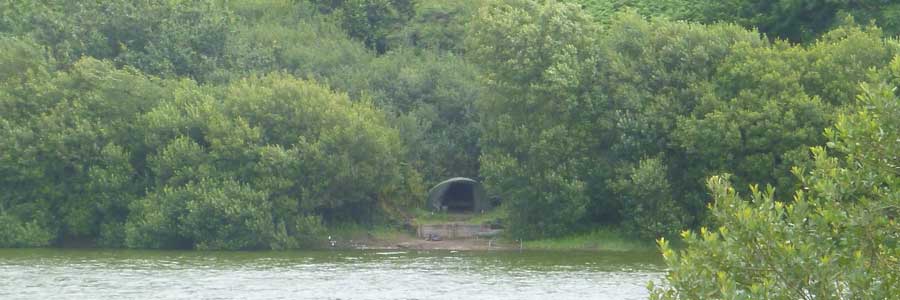
Looked across the lake and saw this. Thought: self-isolation?

What bothers me most about this virus is that it keeps getting things right.

Walked past the "Follywood" sign this morning. Read about it here, for example. Nestled into the side of a medium-sized, mostly residential street in Falmouth, the "Follywood" sign faces the entrance to the Woodlane campus of our local university.

[Universities, I mean. In the same way that Star Wars Episode IV is actually the first film, our local university is actually two universities. But that's too much detail, right?]

In its pursuit of academic excellence, our local university put up the "Follywood" sign at roughly the high point of its drive to increase the number of fee-paying students it could attract. That was early 2016 or thereabouts. [What? Oh - £9,250 per annum now for a UK student, more for an overseas student, but you're not suggesting that a university would increase its student numbers just for money, are you?)

Across Falmouth, property developers responded to the university's pursuit of mass academic excellence by applying for planning permission to build student accommodation - and the planning authorities gave their answer.

To give you an example, when one application near here was opposed by everybody locally, from the local council to the fire brigade, a planning inspector was sent all the way from Bristol to declare that the application had been approved. Silly old us, getting it wrong like that.

Walked past the "Follywood" sign, and later, I'll be walking past that very building site. An open, empty space, flat concrete, gravel, a skip. No builders; the company hasn't come back. Brambles at the edges, first weeds showing, birds, bees.

We can't get in, because there are metal gates. But nature's hard at work, reclaiming the space.

Migrating mutations

10/7/2020

 
We use the word “mutate” when we mean “evolve”, surely?

The virus wants to be caught. Becoming easier to catch seems an obvious response to whatever we do to stop ourselves catching it.

Hard-to-catch strains die out; the easy variants live long and prosper.

I speak from ignorance, of course. I was reading about the so-called D614G mutation (so-called because that’s what it’s called; as I said, I speak from ignorance) which is all about a change to the “spike protein” whereby the virus, er, impales the cells it wants to infect (see above re: ignorance).

I remember once trying to get a tangle of little green weed-seeds out of a dog’s ears after a country walk. Burrs. I know all about things getting hooked on and not wanting to come off.

Anyway, D614G is the new easy-to-catch version of Covid-19. While we’ve been locked down, the virus has been sharpening its spike proteins.

And now we’ve come out into the open.

Central government is urging us back to work and offering us incentives to go out to lunch.

Oh, and the virus has sharpened its spikes.

But hey – the sun’s shining and the shops are open and that little café has put tables out in the open.

Central government really wants us to get back to work and then take a long lunch-break. So let’s grab a table under the trees and celebrate the end of the lockdown.

Except – Melbourne, Australia locked down again; Leicester, UK, locked down again; various pubs in the UK that opened at the weekend – closed again.

All along, the most striking feature of this virus, for me, has been how well it knows us.

No, not quite that – how well it adapts itself to us. It’s not “meant” exactly, but it fits in spookily well with the way we behave.

We hid. The virus seemed to go away. We came out of hiding and started to talk about how we could go back to making taxable money.

Still no sinister rustling in the undergrowth – we started to use phrases such as “after coronavirus” in our speeches.

But mostly, we just settled in cosily to policing each other’s mask-wearing. Relaxed our social distancing and joined the crowd.

We came out of hiding, and we got accustomed to being out of hiding, and let’s just suppose that we began to ease off on our precautions.

Do we really need these fiddly masks?

The ten-second rule applies to snogging as much as to dropped food, doesn’t it? I mean, mmm, the thirty-second, mm, two-minute rule. Nothing infectious there.

I suspect that the virus is giving us time.

It hasn’t been defeated. It’s waiting for us to get complacent, and while it does that, it's gone South for the Winter.

Stock up on essential supplies while the sun shines.

What does the Z-word tell us?

1/7/2020

 
Not that this changes anything, but I picked up an old copy of the Weekend FT magazine (25/26 April 2020) and found a piece by the author Siri Hustvedt in which she describes the virus as a "biological zombie".

So we are, after all, facing a zombie apocalypse. Not important, makes no difference, I know, but I like the reminder of how persistently The Unexpected makes fools of us.

Don't be ridiculous - of course there's no such thing as a zombie apocalypse.

Except that now, there is.

Such confidence! The world fits within our understanding.

Except that now, it doesn't.

Today, I'm not so much bothered by the prospect of a Second Wave of the pandemic, as I am impressed (but not in a good way) by how clearly, and in what detail, we can describe what's coming.

Just as we've convinced ourself that the present pandemic - the exact problem we face now - was foreseeable all along in just precisely the form it's taken - look up all the measured explanations of the recent past - so we're clear on the form that the Second Wave will take.

Autumn is Coming, and with it the flu/Second Wave season.

No. Don't see it. The predictability, I mean.

The virus has a morality to it - Dr Fauci was just on my radio saying that people should think of others when they refuse to, ah, socially distance - and it seems to challenge every attempt to reduce it to a known quantity. [See also Is Covid-19 meant, and if so, what does it mean? from a few weeks back.]

Once The Second Coming Of Covid-19 has decimated the population - and feel free to look up the correct meaning of the word 'decimate' - perhaps we could also talk about the role of central government.

There was the farce of the 100,000 daily tests, not, and now my radio is telling me that local authorities have been fighting to get infection data out of central government. Boris is jumping up and down shouting "Build, Build, Build" and we're all supposed to get the hint that this is a New Deal, geddit?

I know the people in my Nextdoor group - my neighbours. I know several of the people on my local council. I'm a moderator on a local self-help Facebook group. We sent a woman to Westminster in the General Election, but her voice is one among hundreds. I don't remember her name.

I'm not so much exasperated by central government's incompetence, as exasperated by the whole idea that central government could be competent. Whatever "government" is, it doesn't seem to work at that scale.

I'm unequivocally a local, and as I write that - intending to continue with something vaguely sarcastic about fragmenting national identity - I remember the local feeling about non-locals coming down here during the lockdown. Burdening our one hospital ... all that.

PPE, testing and tracing, that app - I don't want to get sidetracked. My point: incompetence by virtue of scale. My follow-up banging-on-about-it same-point-again: they're too far distant from us to do any better. In a crisis, in practice, England is too fragmented to be a viable administrative unit. Maybe economically, maybe internationally, but not when we're facing a social, cultural, health, existential crisis.

Maybe after all, the New Normal won't evolve in response to people not going out even when they can. Maybe the New Normal will be forced into being by local authorities wresting control from the centre and closing their own borders.

Or maybe we'll just change without realising we're changing. We'll look back one day and say, did we really behave like that?

So many deliveries. So many parcels. My innovation of the day would be re-usable packaging. Not just plastic that mulches down into fertiliser, or whatever it does, but cardboard boxes printed on the inside with puzzles and games. Perhaps also large-item cardboard boxes that can be refolded origami-style into tables and children's castles. Dotted lines and silhouettes of scissors.

Sheep's clothing

26/6/2020

 
Move along! Nothing to say here! Move along!

I’ve spent the week writing/editing/scribbling on a printed-out draft of a long-ish (12,000-ish words) short story titled Wolf (A Journal of the Plague Years). Also reading Ross Douthat’s The Decadent Society, which “explains what happens when a rich and powerful society ceases advancing”.

I agree with Mr Douthat. What he said.

Everything from political sclerosis to long-running film franchises, explained. My occasional extravagance is hardback books, so I can even tell you that I like the paper this one’s printed on. Published recently by Simon & Schuster.

My short story, which I started because I’m one short (in my estimation) for a planned collection, has reached the important stage where the print-out joins the assorted debris on my desk (kitchen table), surfacing occasionally, becoming dog-eared, gathering coffee-mug rings and (when I see it floating past and pick it up) scribbled corrections, notes and shopping lists.

I might post it on Medium, where I found the other day that another short story has earned all of 7 cents since posting – or I may not. I like the format at Medium, and there’s something agreeably game-like about such tiny sums of money*.

I’ll just add it to the collection. Late in the running order, which feels right. Coming shortly, et cetera.

Ahem. I did say last week, didn’t I, that I was going to stop my regular habit of posting here every Friday?

What are you doing here?

What do you mean, what am I doing here?
 
*On Medium, you get paid according to how many people read and “clap” your post. I really should think this through, preferably before revealing that my other story got paid 7 cents.

Yippee! We're all gonna buy!

18/6/2020

 
Maybe I should put this on hold for a while.

I’ve launched into something else, and while the self-imposed obligation to post every Friday does come at a convenient moment this week – need to stick the GW in a drawer for a while – it does feel like an obligation.

GW for Great Work – although just the initials are what I use: lifelong nickname for whatever current piece of writing-in-progress is under discussion at any given moment. Picked it up in an editorial office years ago. My GW of yesterday needs to be put aside so that I can come at it fresh, er, tomorrow or tomorrow or tomorrow, so I’ve got time to write this.

But the part of me that writes this is the part that’s writing that. See, officer, I’m not drunk. The part of me that’s writing this, that’s writing that, has got stuck into writing that, and writing this – I’m doing it deliberately now – is taking up head-space.

It’s a distraction. Besides, we’re living through such interesting times that all the commentary has become predictable. No, wait. That doesn’t make sense. Yes, somehow it does.

We’re living in bubbles. In my bubble, the government was too slow to impose the lockdown, is now prioritising The Economy over The Virus – and the shops are open again! Yippee! We’re all gonna buy!

Somewhere out there, no more visible than the hypothetical dark matter in space, is the hidden mass of people who (for example) voted Boris into office despite Labour winning The Argument, and who voted The Donald into office as well.

Out here on the surface of the bubble, so far as I can see, we’ve given ourselves a binary choice: stay locked down; go shopping. Out there in the darkness, further out than I can see, I’d have to guess that people are adjusting the way they live to suit the new normal. Shop-owners are working out how to sell more effectively to socially distanced customers, for example, rather than just obediently switching the sign from Closed to Open.

Griping on about the government misses the point that the government is just the government.

Never mind all that. The surface of the pool may be choppy, but these waters run deep.

I have nothing new to say about These Interesting Times, and capital letters won’t hide that. Shopping patterns seem likely to change, and I’d guess the layouts of high-street shops will change too.

The virus is showing us up for who we are, exposing the flaws in the way we live, blah, blah, et cetera.

In the life I’m not living at the moment, my diary tells me, I’m off to Scotland on Saturday for a week’s holiday. That shadow me is packing the kitbag he bought pre-lockdown at Mallett’s in Truro, and I’d guess he’s made a booking to break his journey with an overnight stay at Tebay Services.

My shadow self will enjoy the journey. He’ll take the direct route, M6, and he’ll listen to music, stop regularly, daydream and occasionally scrabble around on the passenger seat for the digital recorder he carries in the belief that the best ideas come at the most inconvenient times.

For the last twenty miles or so, he’ll be sad that the journey’s not just a little bit longer – but then he’ll get there, and everybody will be there, and his holiday will begin.

In the life I am living now, I have a prescription to collect, a new fridge to buy, and a space where I could put a comfortable chair. Facing my comfortable sofa. The fridge and the chair are daydreams of the lockdown that might become real; the prescription’s an opportunity to join Queue A and look forward to joining Queue B.

Making things right. I was irritated by that queuing system, I remember, back in the early days of the lockdown, but I now realise my dispensary was ahead of its time. I take it all back. Sorry. [To the extent that this blog is an ongoing self-portrait, as I think it is sometimes, je delete rien! Embarrassing as some of it might be.]

In the life I’m living now, and considering that this post is my current GW, I should probably say that I’m letting my LP sit in the drawer to cool off for a while. Lockdown Project, although I only started it … a month ago? No idea, actually. Feels recent, but you know how you get into the habit of saying something's new, even after it isn't? That kind of recent.

[I imagine myself in an old people’s home, reading all these posts and thinking: this was me? Wish I’d spent more time at the beach.]

Ha! “Should” probably say. Picking myself up on that. The future is about “could”. I believe that.

“Believe” is the word we use for “hope”.

Half of me thinks that in three weeks’ time, the bubble will be alive with the sound of people complaining that the government released the lockdown too early. The other half thinks the virus will hold off now until Winter – or Autumn, when we can tell each other that Winter is Coming, ha ha, black humour.

By then – whichever “then” I’m talking about – I hope I’ll have my chair and my fridge in place. In most of the fiction I’ve read over the lockdown, there’s a “me” character – not a character that I identify with, necessarily, but one who comes fairly close to sounding a bit kind of me-ish in his habits.

He may be the Dad. He may be the Co-worker. He may be the Detective’s Partner, the Vaguely Bad-Guy Neighbour who complains about the dog, or if we’re talking about Anne Tyler (start with The Accidental Tourist or A Patchwork Planet), he’s often the younger-than-me-but-I-can-overlook-that central character.

Whatever his character flaws, morals, quest for redemption, contribution to the plot, the “me” character almost always owns a chair in which he sits in the evening with the cold bottle of beer he’s just taken from his fridge.

Even if his only role is to deny the existence of the Supernatural Threat until it walks up to him and eats him – he gets at least one chance to sit in his chair and drink his beer. Even if he dies in the end, he gets, et cetera.

The chair is often identified as a La-Z-Boy Recliner, which I’ve imagined and … now look up online and ... Cor!

I’m gonna need a bigger space.

And either a charity shop selling furniture, or a fatter wallet. The “me” character is never a banker.

In Stephen King’s Bill Hodges trilogy, not much of a spoiler, the “me” character not only gets the chair and the fridge and faces up to the threat; he also gets a quirky sidekick.

Huh! Some “me” characters get all the luck.

I have a feeling that any quirky sidekick I could get would point out before long that (a) I need to Hoover the stairs, (b) I can’t leave the washing-up overnight, (c) I need a haircut, and (d) she’s actually now the Central Character and I’m just the Old Guy Who Writes That Blog.

By then, we’ll only be talking because she dropped in to check that I’m eating healthily and taking exercise.

So the issue for me is type-casting. I haven’t even got the chair for it, but I’m still the “me” character around here.

[Memo to self: dump the patched jacket and the avuncular manner, vacate the corner office in the faculty building with its shelves of ancient leather-bound volumes and strange amulets, and stop giving five minutes to every young detective passing through with a mysterious clue daubed on a fragment of parchment.]

I admit the beer-drinking is attractive.

Feel free to stake out this space – “me” characters always return to the scene of the blog post (or to whatever else they do to fix themselves in the reader’s mind). I’ll be coming back here again.

But not quite so regularly for a while. I have an LP to finish.

Picture
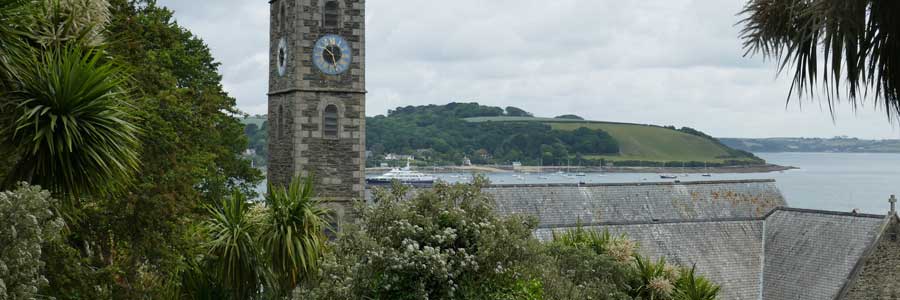
Local church and local headland, plus a yacht that's been here for a while. Oh, and local trees.

Yeah, I wasn't going to do a picture this week. Nor a second post below the picture. But I'd just hammered the final full stop into place on the post above, when the phone rang.

Usually, I keep it muted. There are (were) campaigns for real ale, slow food, et cetera, and I'm running a one-man campaign for phones like they were in the nineteen-seventies. I haven't bought one of those rotary phones you can get now, with the proper rotary dial, but I've come close once or twice.

My campaign doesn't involve me in doing much, except feeling free to mute the thing at times when I wouldn't have had a phone next to me in the nineteen-seventies, and then forgetting to unmute it, but the curious, perhaps serendipitous, consequence is that I no longer hear from scammers.

I occasionally receive phonecalls (and more often return calls I've missed) but today clearly is a receiving day.

"Hey, what's up?"

"You're posting this week?"

"Er - yeah. Why?

"You've sounded a bit down over the past couple of weeks, and I just wanted to check."

"I'm okay, thanks for asking. Bit weirded out by it all. But distracted, not down. I've been working on something else, which is probably what you've picked up. It's a [REDACTED] with razor-sharp [REDACTED] and an extra set of [REDACTED], and of course I'll tell you all about it when it's ready. But yeah. Certainly posting."

"Okay, great. Don't tell me what it's about."

"I won't."

I'm pretty sure you are reading this. Thanks for the call.

What we say and what we do

12/6/2020

 
Just for the record, the 7am news on the BBC World Service this morning told me that the virus is “spreading exponentially” in countries and states where lockdown restrictions have been removed.

There was something yesterday – Radio 4; I was cooking not listening – about the lowest number of something – Deaths? New cases? – since some significant date early in the year, in the UK.

One or other of those is either mistaken, or fake, or evidence of a spectacular change over twenty-four hours. Or maybe there are countries where the virus is just worse and/or people are getting closer to each other. Or it’s our turn next.

Spaghetti Carbonara, since you ask.

I think I’ll just stay at home. The World is still on my doorstep, and I watch it. Occasional activity, occasional puffs of smoke. The maintenance crew chose a Pope the other day – white smoke instead of the usual black.

The world’s largest privately owned yacht is in for a three-month stay. The Captain, or the Customer-Services Manager, or the Landlord, I forget which*, looks forward to welcoming back the owners of the apartments on the vessel, craft, boat, ship, but for now, it’s empty pending the end of the coronavirus crisis.

Empty but for that maintenance crew putting out the smoke signals. In the deep channel upriver, where the cargo ships are laid to rest – laid up, I mean – there’s the quiet hum of enough power to keep the lights on and the berths warm – like the hum of a fridge in a silent house. Comfortable life, if you like maintenance.

I remember one evening, seeing a group of young men jumping onto the quay from an orange plastic life-boat. Going out for the evening rather than arriving home from a shipwreck.

Not that I was going to write about any of this, but I don’t suppose Covid-19 would agree to wait while I write about something else. “Spreading exponentially”. We’ve all been looking the other way lately, so maybe I should bear witness to what I heard rather than assuming that we all hear the same news.

Speaking of which. That statue pulled down in Bristol. It was put up in 1895, 125 ago, and yeah, maybe there are democratic ways of agreeing that a statue should be removed. But 125 years? That’s almost as long as it takes a public inquiry to produce a report exonerating a government.

Black lives matter. Of course they do. It takes a death – another death – to show us that we behave as though they don’t.

We’re not prejudiced. But somehow, judging by what we do, we are prejudiced.

I’m not talking about single police officers.

Different -ism, but I remember being astonished a few years back, when the BBC finally, reluctantly revealed that it paid its prominent women less than its prominent men. They were going to fix that by 2020, I think I remember.

No individual at the BBC would set out to discriminate against women, but somehow they all do. Did.

Back to racism. I wonder if collective racism, “institutional racism”, is what you get when you deny or suppress or don’t even recognise “individual racism”. I wonder if individual racism is such a simple thing anyway. Hardly anybody would use the words “I am a racist”, and most of the people who said the opposite would mean it. But.

Like everybody else, I’m a complex and complicated evolving bundle of upbringing, experience, expectation, nature, nurture, peer-group pressure, education, instinct, being picked last for the team, getting an A for my essay, mustn’t forget Stress, learned attitudes, memory, idiosyncrasy, sheer good looks and remarkable charisma (I made that last bit up). That suggests my attitudes to myself and other people are determined by a head-full of “stuff”. In double inverted commas.

There’s no clean-slate William. My head’s full of what we might as well call -isms. Most of them benign, I hope. But many of them difficult to detect, never mind change.

Okay. Stop for a moment. At no point in human history has a big moral question been solved by an overweight late-middle-aged man sticking his hand up and saying “Here’s the answer!” I’ve even got a (long-ish, grey-ish) beard at the moment, thanks to the lockdown – but even that won’t do it. Even if I write a book about my answer and start an -ism of my own. Racism is too big an issue for me, or even you, to fix.

What we’ve done throughout history is, we’ve built up mythologies and fairy stories, moral tales, around our most difficult issues. The most successful of those have come down to very simple conclusions.

Do unto others. Do all those things that, as instinctive creatures, we find most challenging.

It would be impossible to train a baby out of the startle reflex.

It would probably be impossible to replace Fight or Flight! with Group Hug! But it’s worth a try.

Difference evaporates. We’re all victims; we’re all having a hard time.

There was/is a saying – “less is more”. Difference is similarity.

Watched a TV show the other night, on Freeview. People looking for houses to buy. They had budgets.

In every house they were shown, the pitch wasn’t “This’ll do” but “If you knock down this wall, extend here, punch a window through here, make this room a bathroom, this’ll do."

And watching that statue coming down, I thought: this isn’t our house. This is the house lately vacated by the Victorians. Statues of slavers, streets named after colonial administrators, monuments to centuries-past victories.

We need to knock down some walls.

Let’s move all that Victorian stuff to the attic – sorry, the museum – and live in a stripped-down modernist interior with huge windows to bring the light in and all the communications technology we could possibly need to share our deepest feelings and find our unsuspected prejudices.

Let’s talk. Let’s open up. Let’s trust each other – and be trustworthy.

That’ll do for today.

*There was a report about The World in The Packet, which is Falmouth’s answer to The Washington Post.

PS: Now there’s a group of MPs “calling on the government” to relax the two-metre social-distancing rule because it’s hindering The Recovery. Their “call” is gaining traction in the media. I say: No. Don’t “call on the government” to do it. Take responsibility. Stand very close to each other. Breathe into each other’s air. Take responsibility for your own little corner of The Recovery.

The Noises of Silence

3/6/2020

 
What holds the attention at a time like this?

The wind in the leaves of the big tree. Bird song. The muted roar of the docks.

It is a roar – and it’s got my attention – but it isn’t very loud.

A sudden flight of geese!

But I can’t see them behind the trees.

An argument, just on the edge of hearing. A man shouting, a woman shouting back.

Seagulls. A wood pigeon. More seagulls.

The sun is high enough off the horizon to be properly warm on my face now. There’s a collective noun of small birds in the catkin bush down the slope from me. Hazel? I’m not very good at naming things on the fly.

If I wasn’t sitting out here with my first-thing mug of tea, those birds would be at my Wild Bird Feeding Station, scattering seeds as they get breakfast. I have the makings of a harvest below my bird feeder, my WBFS, heads of corn fully formed but not yet yellow.

I won’t bother grinding the corn between, say, two pebbles from the beach. But I could. A very small loaf of bread. Dough left to rise in a thimble? Fairy story in there somewhere.

It’s Tuesday morning and I’m sitting out here with a mug of tea and yesterday I did the same and everything was so absolutely just right that here I am again.

Wood pigeon.

“Never get used to this,” we said to each other a lifetime ago, sitting in the car in a deserted North Coast car park at night, watching a Winter sea. I think we’d driven there – detoured there – to be there.

For a while after that there was a ferry I needed to catch every morning. It touched the other side of the water at the same time as my long-ago commuter train probably still draws to a halt at Liverpool Street Station in London.

Cari Nazeer wrote a piece on Medium entitled Reclaim your morning commute. “Set aside a commute’s worth of time to do whatever used to keep you busy on your morning journey.” I like that idea. Sit out with a mug of tea listening to birdsong.

I want to say that the muted roar of the docks is over the horizon, but it isn’t. It’s just not foregrounded. “Send to Back,” as Photoshop puts it. I always notice when it isn’t there, so I guess it’s just blended in with the birdsong and the rest of the morning. Behind their layers.

Dover Beach, Matthew Arnold. “But now I only hear Its melancholy, long, withdrawing roar…”

Which isn’t exactly the feeling I get when I hear the muted roar of the docks on a Falmouth morning, but still. I like the poem.

I think I read somewhere that Arnold’s roar can be taken to symbolise the withdrawal of all the Victorian certainties in the face of the twentieth century.

Maybe. Convenient if so.

Suddenly, an aeroplane. First I’ve heard (consciously heard) in a long time.

The docks make a comfortable sound, and I wouldn’t like to be without the occasional experience of opening the shutter in the morning to see some vast ship arriving outside my window.

 Often, they’re built for some mysterious deep-sea purpose and festooned with accessories such as helicopter pads and/or (I looked this one up; ships have web pages) heave-compensated gangway solutions.

The sheer ingenuity of the human mind when presented with a practical problem.

Sorry, challenge. Practical challenge. We don’t have problems any more.

I wonder what the noise for our time would be. The melancholy, long, withdrawing roar of that aeroplane?

Picture
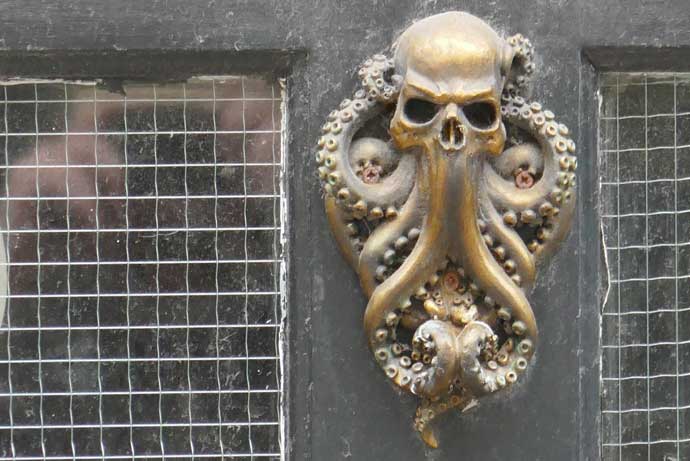
Walking along Arwenack Street, Falmouth, thinking about Cthulhu and all his pals (see below), and who should wave at me across the street but this guy. Well, I can tell you I was ever so slightly startled. He's guarding the door to The Brig. It's a cocktail bar. Pirate theme, big on rum.

My friendly neighbourhood conspiracy theorist tells me that They want the second wave to come during the Summer months, when it won’t be as bad.

So that’s okay, then. There is brain activity behind the decision to tell us all to go back to work despite nothing else having changed. Same old workplace, same old virus.

And long sunny afternoons. And a mellowed-out virus that's kinder to us in the sunshine.

Wait – a virus that encourages sunbathing? I feel another twinge in my sense of the unreal.

Sunlight, said my radio the other day, has both anti-bacterial and anti-viral properties. Well, of course it has.

Just about every component of the modern world forcibly ground to a halt – and now the thing wants us to get some sun.

I can take a hint, but isn’t this weird?

Maybe it’s my cognitive bias going a bit wonky, but if They offered us a choice between (a) a media scientist explaining the R number again and (b) a media atheist giving us a Rational Explanation for the weird fit between Covid and everything we’ve been doing wrong since about 1959 – I’d go for the less patient one.

The atheist, I mean. “How can you believe such nonsense?” is always such a great start to a relationship.

Scientists only get out of bed because they know they don’t know everything, but atheists.

Atheists are inside the box with the rest of us, but they absolutely are not going to let anybody find a lid and try to open it.

Sit down! This is all there is! Tiny little wriggly microbes are causing it!

That’s not a lid! Don’t open it!

Scared? Me? Nonsense!

But don’t open it!

Was it G K Chesterton who said, “When a man stops believing in God, he doesn’t then believe in nothing, he believes anything”? [Spoiler: yes, it was.]

There’s so much on Google and Wikipedia about belief, and faith, and spirituality, and Gaia, and Mother Earth, and The Goddess, and affirmations, and chanting, and shamanism, and healing, and astrology, that it’s actually quite difficult to find that quote about God.

But yes, it was G K Chesterton. [Told you.] He meant, I think, that we either hold to our faith in the one Divine Entity that hardly gets a mention these days, or we become credulous fools.

A variant on Hilaire Belloc’s “And always keep a-hold of Nurse For fear of finding something worse,” I suppose.

Let go of Jehovah, and you get Cthulhu.

Nonsense! Don't often say it, but - nonsense!

There’s something better, not worse, about today’s more forgiving Divine Entities.

[No, I don’t know why I keep using capital D and capital E. A primitive part of my brain has taken over, clearly. Nurse! Help!]

Never mind whether they exist or not. Never mind whether you’re a hard-line atheist or ready to accept the geneticist J B S Haldane’s “suspicion” (his word) that, “The universe is not only queerer than we suppose, but queerer than we can suppose.”

Doesn’t matter. We’re facing a deadly global pandemic that’s not only killing people; it’s killing the way we live now.

Whatever form they take, and even if they're just words for a way of treating the world, we need the DEs now.

I caught myself planning a vegetable garden yesterday.

I wonder if the “gift” of this terrible virus has been a greater awareness. [Greater, transformed, different, awakened, woke, perhaps even pagan - feel free to alter that sentence.]

We’ve all confronted our own mortality. We’ve all heard the government say that it’s safe to send our children back to school – and the parents among us have made their own decisions.

We’re all looking for the comforts of Normal, but we’re doing so with our eyes open.

We might believe in Gaia and the angels but we have absolutely no faith in Them.

That's healthy, right? They might think they can instruct us, or nudge us, or even deceive us back to Normal. But that was the Old Normal.

The New Normal isn’t the old normal with added face-masks and social distancing.

The New Normal is us, working together, making our own decisions, growing our own vegetables, watching sunrises, casting aside differences.

Making our own economies.

Not making the same old sacrifices and paying the same old taxes to the old one.

Sunny with a chance of sackings

27/5/2020

 
Sunshine. Birdsong. Big cruise ship. Today is going to be a warm day.

When I get to my big exercise moment, I might take swimming trunks.

The water glitters in the sunshine. To judge from the trees, there’s hardly any wind.

Flurry of posts yesterday, inviting me to help various friends by signing petitions to demand the sacking of a government adviser. Looked into it further, and found that the BBC had done a timeline of where the man drove and when he drove there.

In-depth investigation is so easy when the news fits into a template. Was it Archibald Cox? No, Howard Baker who said, “What did the president know and when did he know it?” About Nixon. Watergate.

Today, the drive to Barnard’s Castle fits into the slot in the template formerly occupied by the 18.5-minute gap in the White House tape.

My friends raising petitions to demand the sacking, et cetera. Indignant. Outraged. I hesitate to use the term “usual suspects”, but yeah – those friends. They’ve been noisily bothered about everything since the 2016 referendum. Serial petitioners.

Two seagulls have made a nest on my roof. This is not good news – not for the roof – but I can’t quite bring myself to interrupt their honeymoon.

When the family’s grown up and gone – which will be September, I’m told – I shall take steps to prevent their return.

Or not. I don’t know. Let’s see how they react to my presence in their territory once their children are born. Let’s check the roof, come September.

There were people on the beaches at the weekend. We went to a more secluded beach that doesn’t get much tourist traffic. Swimming. Picnic. Social distance. Locals, but not many locals.

Some of my serial-petitioner friends aren’t even British.

If I wanted to get into serial-petitioning, and to do it properly, I would have to take an interest in the government advisers working for foreign leaders – such as, for example, oh, let's say ... yes, the Swedish prime minister.

Who turns out to be Stefan Löfven, leader of the Swedish Social Democratic Party – thanks, Google.

Further search – yeah, okay. A name. An adviser. But he left in 2019. And wait a minute – Sweden doesn’t even have a lockdown. Doesn’t matter where he drove and when.

Here’s a photograph of the Swedish government … uh huh, here’s another name … and here’s a headline from something called Business Insider, which sounds familiar but I’m not going to check that it is what I think it is because it gives me the headline I need. Thanks, Business Insider.

Posted four hours ago. "Sweden touts the success of its controversial lockdown-free coronavirus strategy, but the country still has one of the highest mortality rates in the world."

Hm. Define success. Also caught a clip of a non-British chat show yesterday, shared from YouTube, subtitled, I guess European, in which they were laughing about the UK's government-adviser-gate shock-horror-scandal.

Maybe there are British people who demand the sacking of Swedish government advisers on a regular basis. Maybe it's a serial-petitioner thing.

Maybe there are Europeans for whom laughing at British politics in the acceptable face of ethnic humour.

I wonder. Actually, I don't. For me, the way ahead is clear.

Either I draw up a petition demanding that Sweden imposes a lockdown, or I go swimming.

I’ll give you a clue. “Get a life” is my motto for today.

Picture
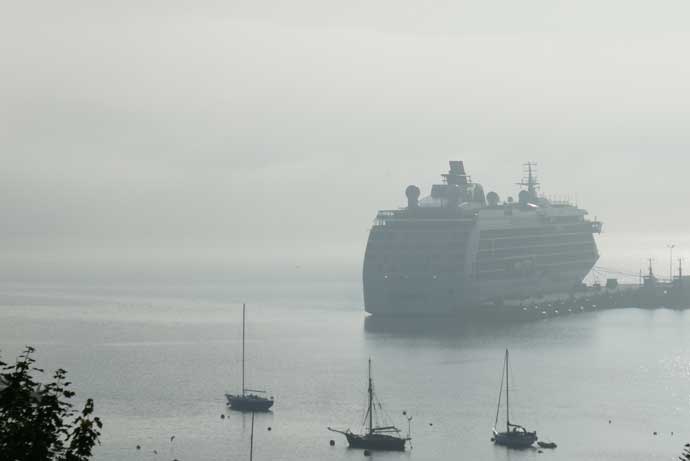
Dunno, but it wasn't there yesterday. Turns out to be The World, the largest privately owned yacht in the world (sic), appearing out of the morning mist. You can buy apartments in The World, and float around permanently.

Not that I’m in the mood for grand pronouncements about gender differences, but I was talking to a friend the other day about Relationships. Capital R.

Talking to a woman friend. Of a certain age. Which is roughly my age.

She missed being loved by somebody. She knew how it felt to love somebody, and – that too, but being loved was what she missed.

Not that she was going to do anything about it. Life was good. And men of our age – yeah, okay, stories were told and I came away with the impression that the bar for men of our age is set pretty low.

If I decided that I missed having a Relationship, and decided to do something about it – well, it seems that just turning up on time would beat most of the competition.

Turning up on time for dates that I had arranged with her in mind, not just to suit myself.

Occasional gifts – nothing expensive, mind; it’s the thought – and a reminder set in my phone for her birthday.

Don’t even have to remember the date. Just the reminder would be nice.

Knowing that I’d put it on my phone.

Going away. Romantic destinations. Spontaneity. Laughter.

Somebody to talk to.

Did I realise that if I got a haircut, lost the ponytail, I’d be really quite–

She stopped. We looked at each other.

We both burst out laughing.

What it is to be friends.

Mais où sont les Brexit Negotiations d'antan?

21/5/2020

 
“Brexit means Brexit” led us into fevered speculation as to what Brexit meant. Now we’re all totally flummoxed by “Stay Alert”.

No, I’ve no idea either. There are Five Tests I apply to government slogans, and this one fails all of them.

But hey, who knows what they’re on about? Latest news is that anybody above the age of five who has the disease and is displaying symptoms of the disease can be tested for the disease.

Oh, and they’ve recruited lots of minions (no offence; I like those little guys) to run their contact-tracing service. I know one of them. She’s going to be given lists of numbers to call, she tells me.

“Hello? You’ve been in contact with somebody who has the disease. Have you got it, and are you displaying symptoms? No? In that case, wait a few days, and if you do come down with the disease, we’ll arrange to test you for the disease.”

Got to be showing symptoms, though.

“Actually, this is my home number. Go to gov.uk and that’ll give you a code to get you on the waiting list for a test. If you’ve got the disease and are showing symptoms, of course.”

Way back at the end of New Labour – “Not near you, no, but you can choose whether you want to drive to a test centre in England, Scotland or Wales” – back at the end of New Labour, the government spent a lot of money and time developing an unworkable identity-card scheme that nobody wanted*. Now we have this contact-tracing apparatus. Worked well in China, apparently.

“My partner’s a martial-arts enthusiast with serious anger-management issues. And he works from home. Now stop calling me!” [Update as of Wednesday morning: the home email addresses of 300-ish contact-tracers have been accidentally released into the public domain. I thought I was making this up.]

After “Stay Alert”, I’ve discovered, the second part of the new slogan is “Control the Virus”, which has that fuzzy-comfortable implication that you can actually control the virus. Along with the slightly less comfortable implication that the government is delegating control of the virus to you.

Good luck. Teach it to sit, and maybe to retrieve tennis balls when you shout “Fetch!”

And don’t blame the government for the second wave, because it’s down to you now. Remember that marketing slogan whereby products and services were always Putting You In Control? Exactly. Click here if you accept the terms and conditions. Paragraph 1, line 1: Don’t blame us.

Sooner or later, it’s going to occur to somebody in government that (a) they need people to be alive to book air tickets, pay taxes and revive The Economy, and (b) that their contact-tracing thing will only work if we’re Put In Control of being legally obliged to carry our smartphones at all times.

Remember that scene in the movie where they find the tracking bug and fix it to somebody else’s bumper? Can’t do that with an identity ca– sorry, smartphone.

I want a simple app that makes a noise whenever the distance between my phone and another phone falls below two metres. Something like a personal alarm, so simple that I can control it for myself without needing to be Put In Control.

Something that yells at passing joggers for me. Alexa? Make yourself useful for once?

Something that any passing millennial could design in her sleep without the need to recruit – how many? – contact tracers and the bureaucracy to manage them.

24,000 covid-tracers already recruited, going on 25,000, who will administer 10,000 tests per hour, rising to 100,000 tests per hour before PMQs next week, and twice the population tested by next bank-holiday weekend at the latest. We’ve got this virus licked!

The government’s panicking, isn’t it?

What they can’t say is: nothing’s changed. This is the same monster that we brought you inside to avoid. Now we need you to go outside again and make money for us. No, the monster’s still there. Stay alert! Control it!

[Aside: what they can say, deplorably, is that children are also vulnerable at home so might be better going back to school. Oh, very convenient and not what you were saying a few weeks ago. I have a quote lined up but I won’t use it because it enrages me.]

We’re responsible, right? If there’s a second wave, it’ll be our fault because we weren’t alert enough and failed to control it.

The tragedy is that although the government’s changed the underlying message from “We’ll take the credit!” to “It’s not our fault!” – it hasn’t relinquished control.

You don’t, though, do you, if you’re a government that’s panicking?

You double down: more big numbers in the daily briefings, more test kits posted and counted as done, more contact-tracers recruited; more scientists, more slide shows, more explanations of the R-number (there are two R-numbers, did you know?); all to back up your projections of how successful you’re about to be.

So: no quick, noisy, millennial-designed apps. Instead, a contact-tracing bureaucracy. Outsourced. Our contact-tracers’ personal data is very important to us. Lessons have been learned. 24,000, 25,000, 10,000 per day, nought to sixty; In the future, everybody will be tested for fifteen minutes.

This is another aspect of the apocalypse that fiction didn’t foresee.

The first one was (I just love this), It’s The End Of The World As We Know It (ITEOTWAWKI), and yet we can still order takeaway pizza. Got that. Loving it (with the G).

But here’s the second one: ITEOTWAWKI, and we have a government casting around for solutions that above all fit the established bureaucratic method. Holy challenging but realistic targets, Batman!

Part Three of the new slogan is “Save Lives”.

Gosh, you are going to be busy.

*The Identity Cards Act 2006 was repealed in 2010.


Picture
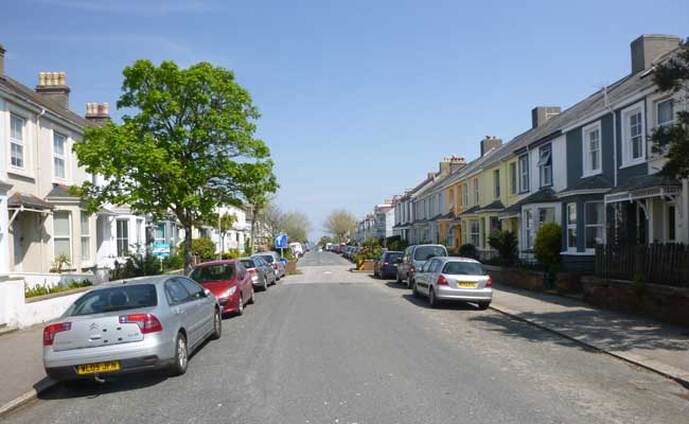
Not a recent snapshot, admittedly, but I've used my empty-road shot and my empty-beach shot, and maybe it's time to challenge our preconceptions of what picture would best express: Summertime, and the world's closed down.

My question for today is: who does this algorithm think I am?

Not in a pompous way – not “Do You Know Who I Am?” spoken in that tone of voice. I just thought – yeah. I wonder.

I’m curious. We talk about Artificial Intelligence, and if we take that seriously (or imaginatively), then we’re talking about some kind of mind. With, let’s assume, thought processes and opinions.

Follow the logic of all the current blether about the exciting prospect of AI, blah blah, and even if that isn’t true today, it will be true soon. So there. You’ve hyped yourself into taking me seriously, professor. At least you got the funding.

No, I’m not going to try to make this funny. My laptop thinks I’m in Dorking and I wrote a piece once about the online provider that had analysed my data and worked out that I’m a Spanish woman.

Been there, done that. Today, I’m just looking at another intelligence across the divide, and wondering. There is a tentative meeting of minds going on here.

Amazon sent me an email yesterday. Books I might like to read on my Kindle “based on recent purchases”.

Actually, let’s do this as a competition. No need to enter. But, you know, think about it if you’ve run out of other distractions.

The competition question is to identify my recent purchases based on Amazon’s recommendations.

Here goes. That wise old algorithm at Amazon suggests that I might like to read:

All The Devils Are Here by Louise Penny
Howl’s Moving Castle by Diana Wynne Jones
Cold is the Grave by Peter Robinson
Heir to the Empire: Star Wars Legends (The Thrawn Trilogy) by Timothy Zahn
House of Many Ways by Diana Wynne Jones (I’m giving these in the order Amazon lists them)
Cannery Row by John Steinbeck and [with an introduction by] Susan Shillinglaw
Speaker for the Dead: Book Two of The Ender Saga (The Ender Quartet Series) by Orson Scott Card
Aberystwyth Mon Amour (Aberystwyth Noir Series Book 1) by Malcolm Price.

I want to meet myself!

More to the point – here’s the competition – what have I been buying?

Bonus question. What other aspects of my personal history did the wise old algorithm take into account when compiling its list of recommendations? What did it discount?

I will tell you – I’ve read a book by one of those authors, but not the one suggested and not on my Kindle.

If anybody actually asks, I might even reveal my recent purchases next week. I’ll try to keep the “These are just on my Kindle: I read impressively intellectual books in hardback, y’know” paragraph down to a minimum.

There’s a mind out there that sees me as a reader who would go from [insert one author from the list] to [another] followed by [another].

I should know better, but – I’m kind of flattered.

Footnote: I've always had a sneaking fondness for Amazon, ever since they were a plucky little dot-com fighting to survive the dot-com boom/bust. I know that isn't a fashionable opinion, but never mind. It's fair to add that there's always a "find out why we recommended this" button on Amazon's emails. If I'd already written a below-the-picture piece for this week, I would have just gone to the "we recommended this because you bought that" page and forgotten the whole thing. But I like to think of that algorithm, edging itself towards self-awareness. I wonder if it knows Skynet.

So who gets to fight the virus on the landing grounds?

13/5/2020

 
If Covid-19 wasn’t driving a deadly global pandemic, it would make an excellent McGuffin*.

There was a burst of Politics-19 last week. Boris went on the box to tell us – sorry. The Prime Minister gave an address to the nation about progress in the war against the Naz– sorry.

Where we were with the lockdown. He talked about that. Changes. You were there. Covid-19 and how he was changing the rules of the lockdown and introducing a swingometer-thing to tell us how bad it all was.

There was a new slogan. He might have mentioned that a few times.

We’ve dropped the Five Tests. But we do have a swingometer.

The Prime Minister’s Address To The Nation followed a week of media reportage about the changes he was likely to make to the lockdown – to the extent that there were discussion programmes about the changes before they were even made. Just like old times.

But the real treat for nostalgia buffs was the immediate response to the PM’s speech.

“Naah, naah, not listening, can’t hear you, naaah, don’t understand, not clear at all, stay at home, don’t stay at home, completely incomprehensible, naah, don’t understand a word of it,” would roughly summarise Facebook’s response as it came to me.

Then, when we’d all pulled our fingers out of our ears and agreed that we hadn’t understood a word of it, came the sharing.

Three times into my newsfeed on Monday came the same lengthy itemisation of all Boris’s failures over the course of the pandemic. Shared independently by three people, I mean. All familiar names from the 2019 political season.

These long diatribes always have some merit, and no, I don’t think The Johnson is the best prime minister since, um, since … have to think about that one. The Covid-19 outbreak could have been handled better. We could have anticipated the virus’s every move, and – yeah, right.

Anybody scoring political points based on hindsight should be invited to tell us what to do next – and held to account.

That shared list. Yes, he made mistakes. Yes, there were precautions he could have taken earlier, and that week when we were told not to go out but everywhere was still open … confusing.

But the impact of the list was blunted by the overstretched and wilful inaccuracies.

For example, the words “Boris Johnson misses COBRA meeting” – heard this one before – don’t take into account that it was the Health Secretary who was holding a meeting in Cabinet Office Briefing Room A, not the Prime Minister. [It’s a room, people.]

Oh, and the words “Boris Johnson retreats to his country manor” is an odd way of saying that the Prime Minister went to the Prime Minister’s official residence outside London – Chequers – to recover after his time in intensive care.

The man doesn’t have to be a full-time pantomime villain to be vulnerable to criticism.

My issue with the speech was the number of times Johnson addressed the British public as “you”, as in “You” have been very good about staying at home.

A trifle de haut en bas, doncha know?

I don’t think “You will fight on the beaches … you will never surrender” would have been quite so effective for Churchill in 1940. Just saying.

As to the new slogan – here we are discussing the slogan, not the policy behind it; good thing we've got a swingometer for the in-depth analysis – I found the old one problematic enough. “Stay at home, protect the NHS, save lives” seemed an odd ordering of priorities, until I grasped that staying at home would protect the NHS so that it could save lives. Ah, got it.

The new slogan – actually, I’ve forgotten the new slogan. “Stay alert,” something, something.

The policy. We reduced the R-number by staying indoors. Now we’re going outside again. Nothing else has changed. Hmmm.

This week, all the media coverage has been about the second wave that hasn’t happened yet. This is either world-class expectation management by the government, or obvious even to the media, or both.

This relaxation of the lockdown is not the end. It is not the beginning of the end. But it is perhaps the end of the beginning.

Now it gets serious.

*Oh, come on, you do. Alfred Hitchcock’s term for the thing that drives the action in a movie. The Maltese falcon in The Maltese Falcon (1941), for example. The stone in Romancing the Stone (1984). Or I suppose you could say, the ring in Lord of the Rings (2001 and onwards for the films directed by Peter Jackson).

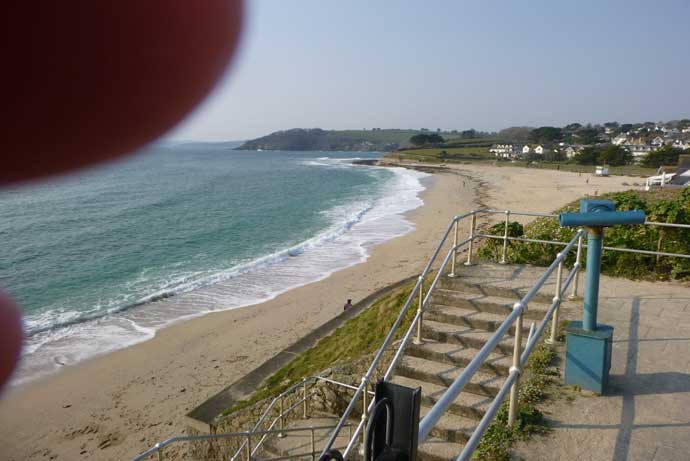
Picture
Yes, I know that's my finger. Small camera, big finger. I never said I was a photographer. But I did want to keep this view of an empty beach in early May 2020. Gyllyngvase, obviously.

Hindsight is a wonderful thing. We should have used it to defeat the virus.

My only other thought, as I grumble my way through this, is that the various presenters and interviewers in my radio should be put in charge of the crisis.

They know, unfailingly, what the ministers did wrong, and they’re able to spot errors of policy where nobody else was even looking. With their accusative self-importance, they should take over.

One of the media’s people was touring the studios yesterday with a line that he rather liked: there are workers who are unemployed and they don’t even know it yet.

Because their employers won’t be coming back from the brink.

Boyo, there are whole industries that are dead and don’t know it yet.

But we have to go through this stage of trying to revive the dead donkey.

Just as the petty adversarial politics of the past keeps trying to reassert itself, so do the industries of the past keep trying to stand up again.

The Economy is in a recession, apparently. A line can be drawn on a graph. Okay, it points sharply downwards, but it connects to the line of the past. No disconnect there.

Stage-coach manufacturers forecast that it will be two years before they get back to normal after the invention of the automobile.

I’m sorry. I’ll read that again. Airlines forecast that it’ll be two years…

If we assume that cramming people back into buses and tube trains turns out not to be as effective as the lockdown in quelling the virus, we can forecast a future in which it is accepted – at last – that the old ways are no longer tenable.

The population density of cities is no longer attractive. Global supply chains still operate, but the quarantine restrictions… People still go out shopping, but less often, and they grow/make/recycle more of their own…

The cinema’s a drive-in now. That lovely little Italian place still has the same number of tables but the intimate atmosphere has gone since it moved to a football stadium at a knock-down rent. At least the tables are so far apart that we get elbow room now.

There’s a difference between planning for the future and trying to maintain the immediate past.

I saw a news item, somewhere online, about three households – neighbours – who had self-isolated together. Their children play together, home-school together, they’re in and out of each other’s houses, but they’re closed to the outside world. Locked down.

Then I thought about that African proverb – it takes a village to raise a child. And those early news pics of villagers in Wuhan province manning roadblocks to keep strangers out. It takes a village to self-isolate and still be economically viable.

And I thought – somewhere in all that is the future.
<<Previous
Forward>>

    Dear Diary: The Archive

    April 2025
    February 2025
    January 2025
    April 2024
    July 2023
    March 2023
    May 2022
    November 2021
    October 2021
    July 2021
    June 2021
    May 2021
    April 2021
    March 2021
    January 2021
    December 2020
    November 2020
    October 2020
    September 2020
    August 2020
    July 2020
    June 2020
    May 2020
    April 2020
    March 2020
    February 2020
    January 2020
    December 2019
    November 2019
    October 2019
    September 2019
    August 2019
    July 2019
    June 2019
    May 2019
    April 2019
    March 2019
    February 2019
    January 2019
    December 2018
    November 2018
    October 2018
    September 2018
    August 2018
    July 2018
    June 2018
    May 2018
    April 2018
    March 2018
    February 2018
    January 2018
    December 2017
    November 2017
    October 2017
    September 2017
    August 2017
    July 2017
    June 2017
    May 2017
    April 2017
    March 2017
    February 2017
    January 2017
    December 2016
    November 2016
    October 2016
    September 2016
    August 2016
    July 2016
    June 2016
    May 2016
    April 2016
    March 2016
    February 2016
    January 2016
    December 2015
    November 2015
    October 2015
    September 2015
    August 2015
    July 2015
    June 2015
    May 2015
    April 2015
    March 2015
    February 2015
    January 2015
    December 2014
    November 2014
    October 2014
    September 2014
    August 2014
    July 2014
    June 2014
    May 2014
    April 2014
    March 2014
    February 2014
    January 2014
    December 2013
    November 2013
    October 2013
    September 2013
    August 2013
    July 2013
    June 2013
    May 2013
    April 2013
    March 2013
    February 2013
    January 2013
    December 2012
    November 2012
    October 2012
    September 2012
    August 2012
    July 2012
    June 2012
    May 2012
    April 2012
    March 2012
    February 2012
    January 2012
    December 2011
    November 2011
    October 2011
    September 2011
    August 2011
    July 2011


No animals were harmed in the making of this website. Other websites are available online (and off). All the content here is copyright William Essex, this year, last year, the year before that and, you guessed it, the year before that, although I don't have the time right now to hunt out that little symbol. This website uses organic ingredients and respects your privacy. Come back some time.

Promoted by T&F CLP on behalf of William Essex at PO Box 16, Jubilee Wharf, Commercial Road, Penryn TR10 8GF.​