William Essex
  • About Us
  • About Me
  • Dear Diary
  • Books (and other stories)
  • This takes you to Medium Dot Com

Catching panthers in red weather

27/2/2018

0 Comments

 
“Black Panther” is an oxymoron. Is that the word? Don't know, don't care. Panthers are already black, so if we’re trying to be too clever by half, a black panther is a black black animal. No, technology, I did mean to write that. Try to keep up. The Black Panther movement had a reason to emphasise the colour, and I think I read that it was formed shortly after the comic-book hero first appeared (I’m not suggesting a link). Back then, yeah, Black Panther made sense as a name, although for example Shaft (1971) got away with not being identified by one characteristic. As did Kojak (TV, 1973 to 1978, although his thing was more of an addiction than a non-hairstyle), and more to the point I suppose, the differently abled superhero Daredevil (the 2003 film, for example).
     I suppose it says something pretty obvious that there’s no film listed at IMDb under the title White Superman, nor indeed White Spider-Man (and White Chicks, 2004, is a film about two black guys, neither of them minstrels), and I guess that White Wolverine (Angry Tanned Unshaven Wolverine?) is still in development purgatory. Never mind. [For the record, the film Panther (1995) tells the Black Panther movement’s story.] Reading a preview article*, a week or two back, about the new Black Panther film, I came across this. The article referred to last year’s Wonder Woman film “shattering the notion that comic-book films should only be made in the image of a young male audience”. Then the article suggested that Black Panther is “out to challenge assumptions of race, not gender”.
     Reader, I saw the film. Both films. Wonder Woman has been around for a while (first appearance in 1941, says Wikipedia). In Gal Gadot’s 2017 interpretation, she doesn’t wear her underpants outside her tights in the approved manner for superheroes, doesn’t wear tights at all, but apart from that (and ignoring a jokey moment when she rejects a long skirt), she just goes ahead and does the superhero thing. Lots of property damage; supervillain defeated after much adversity. One of the principal villains is a woman. Can’t say I came out of the cinema feeling that my assumptions of gender had just been challenged, though. That was a superhero. In a superhero movie. Enjoyed it. Enough said.
     Black Panther is another superhero film. There are references to oppression, the slave trade, and the morality of the film is all the more thought-provoking for not being the usual clear-cut good/bad divide. Martin Freeman, playing a CIA agent, is on the receiving end of the only apparently racist (it seemed to me) moment. It was oddly difficult to take sides in the central dispute, and I felt for the “bad guy”. Towards the end (stay to the very end of the credits), the punchline of the movie was, from memory, “We all have to work together as if we are one single tribe.” But for all that, it was another superhero film. Enjoyed it. Can’t say that I came out of the cinema feeling that, et cetera, race, challenged, because I’m not sure that I went in with any. The bodyguards were women, but actually, they were bodyguards. Gender wasn’t an issue. The skin was skin-coloured.
     And that’s the point. I’m not qualified (sic) to talk about racism in this country, for the same reason that I don’t consider myself a feminist. But it seems to me that we shouldn’t miss the moments when our attitudes suddenly turn out not to be there any more. Is that how change happens? It creeps up on us? We get so used to thinking one way that we don’t notice that the world has changed and us with it? Part of the outrage of unequal pay, and the same goes for racism, today, in this century, in this country, now, is that it’s so incongruous. It’s not just wrong; we all know it’s wrong. Only companies and people (and political parties?) that have failed to emerge from the past tolerate gender inequality (and racism?).
​     They're anachronisms facing a simple challenge: change, or fade into irrelevance. For the rest of us, though, there is still a challenge, albeit a slightly more complex one: recognise that you've changed; acknowledge change. Hulk wasn't "made in the image of a young male audience", and nor were, say, the Fantastic Four. Mr and Mrs Incredible were made in the image of a hard-working family, come to think of it. There's a cover, I think, showing Captain America in a punch-up with Hitler. Most of the superheroes, in real-world terms, and this goes for Wonder Woman and Black Panther as well, are old enough to be our great-grandparents. I'd guess that they've grown out of assumptions, etc., and it's time we did too.

*Interesting article, about more than just the film. Pow! The superhero who got under my skin by Ekow Eshun, Life & Arts section of the Weekend FT, 3rd/4th February 2018.

Picture
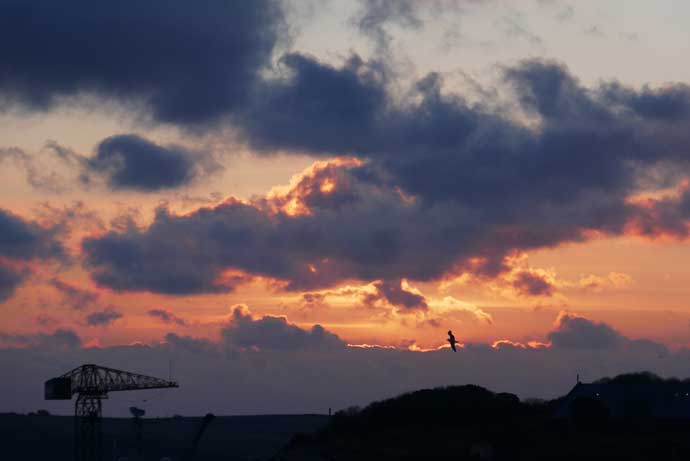
This picture was taken shortly before the snow came, see below. I had a punning caption all lined up about cranes as an endangered species, and one did collapse at the docks a while back, but just look at that sky. Snow? Not a chance.

To go on this interminably about Brexit is to express a faith in the government's ability to achieve a right result, one way or the other. To believe that Remain/Leave will deliver a definitively better future than the alternative, is to forget, first, that we're living unpredictable lives, at the mercy of events, and secondly, that the government is implemented by career civil servants, with an unavoidable bias towards the status quo, at the direction of pragmatic idealists whose first instinct is to resort to soundbites rather than evidence.
​     Nothing is definitively right or wrong. It's all a step towards whatever happens next. Negotiations on big international treaties and issues are invariably reported as processes towards a form of words that everybody can sign, rather than processes towards a solution. Everything is a can to be kicked down the road. Europe isn't going away, and nor are we.

Friday, 2nd May, a footnote to make up for yet another Brexit rant. Yesterday and the day before, Falmouth (the UK original) ground to a halt after a few inches of snow. No traffic, most shops closed, students using surfboards as toboggans. The TV news filled up with reports from young journalists in remote places talking about sheep and stranded motorists needing to be rescued. A&E staff were reported to be bedding down in their hospitals; farmers were interviewed about using their 4x4s to bring food to pensioners. People smiled at each other as they crunched past on the street.
​     Globalisation has given us embarrassment about the national tendency to get excited about the weather. There are countries that get more snow, for longer, that manage perfectly well. We must look ridiculous, goes the conversation, as we try to scrape together enough snow for a snowman from around the abandoned cars. But it's not the snow that's exciting; it's the unpredictability. Went to bed last night to a snow scene; peaceful, quiet. Woke up this morning (having been woken up several times in the night) to find the snow more or less gone, temperature above freezing, and the forecast storm, Storm Emma, living up to its designation for once.
​     It's very windy. So windy, in fact, that you could almost put money on tomorrow being a flat-calm day, possibly thick fog but more likely a warm sun in a clear blue sky. Or maybe snow again. That's what's exhilarating. Must get some wood for my lovely little Anevay stove - tea party on the beach tomorrow.
0 Comments

The Unwearable Lightness of Being

20/2/2018

0 Comments

 
When Gandhi approximately said, “Be the change that you want to see in the world,” I wonder if he meant, “Talk endlessly about the change you want to see in the world.” Or perhaps he meant, “Post frequently about change, comment about it, sound off on broadcast ‘packages’ about the issues raised by it.” Perhaps he meant, “Spend money on this stylish range of Change accessories,” or, “Express your Change lifestyle by buying this luxury cotton-rich tee-shirt with the word CHANGE printed on it.”
​     He probably didn’t mean, “Fight for Change!” or even “Change!” – at least not with the exclamation mark. The verb in that version is “Be”. Just “Be”. [And if you like a complete distraction at a key moment, the phrase “Live and Let Live” was used to describe an unofficial system of conflict avoidance during the First World War. Soldiers in the trenches – actual soldiers, effectively defying orders even if they weren’t being told to attack – would refrain from taking opportunities to shoot their counterparts on the other side. Wikipedia doesn’t use the term “working-class solidarity”, but you can if you like. With Tsarist Russia collapsing on the other side of Europe, imagine the unease in the Officers’ Mess*. And now back to the blog post.]
​     What Gandhi really said was, apparently, “If we could change ourselves, the tendencies in the world would also change. As a man changes his own nature, so does the attitude of the world change towards him. ... We need not wait to see what others do.” That last bit is as important as the rest of it. Don’t wait for anybody else. Change – or rather, Be, because I think the bumper-sticker version is a valid abbreviation – and let the world follow. Or not. Easier said than done – I’m thinking about several of the big indignations of our day – but Gandhi’s talking as much about what not to do. Light doesn’t lecture darkness; it just turns on.

*Or read Terry Pratchett’s Night Watch (Doubleday, 2002). In particular, scenes around the formation of The Glorious People’s Republic of Treacle Mine Road.

Picture
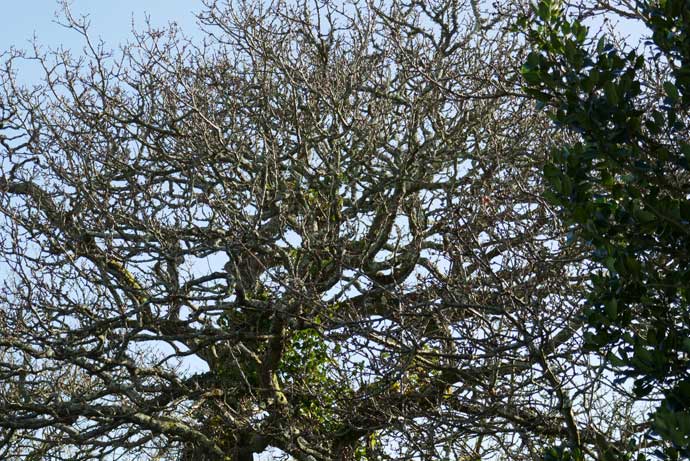
Today's instalment in our popular series, "William's taken another picture of a tree". Enjoy!

Non-apologies are back in fashion. There was one this morning, repeated perhaps six times in the space of a short interview. Several the other day. And several more, a little before that, in the furore over the gender pay gap. We're very sorry, apparently, that woman feel that way - "we" being company bosses who are paying women less than they're paying men.
​     Non-apologies are obvious, but I wish they could be challenged more. Where the apology would be, for example, "I'm sorry I punched you on the nose," the non-apology is, "I'm sorry you have bruising on your face." Notice the distastefully careful avoidance of any admission of liability. Of course, we're all madly sorry that women are so upset about being paid less, blah blah, but we neither admit nor feel liability, and while we're on the subject, perhaps we could mansplain yet again, in our patronising voice, the various ways in which the systems we've set up don't allow us to ... out of our hands, you see ... so we're sorry you feel that way. Ma'am.
​     It's not just the calculated evasiveness, which in my opinion amounts to premeditated dishonesty (although tax evasion isn't illegal, so I suppose equating any form of evasion with "dishonesty" is a bit harsh), but the, not sure how to put this, moral flabbiness, lack of respect for the other, self-centredness, legalistic persnicketiness; yes, that's it, the legalistic persnicketiness that gets to me. Take that, spellcheck!
​     And as I say, the failure to challenge. Costs have been cut, and these days, even the most investigative reporting amounts to, "Now I'm going to interview my fellow journalist about this story," but when there is somebody in the studio, and you're determined to interrogate them about the past rather than let them get onto whatever agenda they're pushing today, surely you could break from your prepared list of versions of the same question to ask, "Does that mean you're apologising for what you did?"
​     Or maybe just say, on behalf of the entire audience, "We know what you're doing." In that sneery voice that goes so well with the phrase. Because we all do, don't we?

​While I'm on the subject, there was a piece in yesterday's (Monday's) Financial Times suggesting that companies might be holding back their pay data until immediately before the deadline for disclosure (4th April) in the hope that they might be overlooked in the last-minute indignation-frenzy. Towards the end of the piece, the possibility was raised that some companies don't understand the reasons for their gender pay gap.
​     And by extension, the reasons why they pay anybody whatever they get? It hadn't occurred to me until now, not clearly at least, but there's an assumption in this gender-pay thing that companies at least know what they're doing. That rightly or wrongly, they have arrived at a set of criteria whereby they decide an individual's (or a job's) rate of pay. Oh, silly me. They haven't a clue, have they?
0 Comments

How did it come to this?

16/2/2018

2 Comments

 
We condemn each other online, and call it “virtue signalling”.
     Virtue?
    We’re like self-appointed prosecutors, loudly getting ahead of the judgement in a show trial. The more emphatically we condemn, the more we believe we’re telegraphing our best qualities.
     We compete to throw the first stone. Somehow, we manage to believe that our stone-throwing gets us in with the compassionate crowd.
     How did democratic, live-and-let-live, laissez-faire liberalism turn into such a rigid orthodoxy?
     When did being a nice, fluffy, kind person become so hard-line compulsory?
     I almost hesitate to write this, but somebody should call up a certain disgraced film producer just to check that he’s okay.
     Virtue is elusive. It requires courage. I suspect that it can’t be found in crowds. I suspect that it can’t be found in following. It’s a thing of the soul and presents a question every time we act or react. If we answer that question wrongly, that wrongness is at least as much our own as anybody else’s. We may transgress in the public domain, and there may be a penalty, but the real work is in our understanding.
     And perhaps we come by stages to knowing that. Perhaps we learn something valuable by making the journey from one answer to another. There’s a moving passage in Lauren St John’s Rainbow's End: A Memoir of Childhood, War and an African Farm (Hamish Hamilton, 2007) in which she describes the process of realising that the propaganda of her childhood was a wrong answer. I remember thinking as I read it that there’s something of that journey in all our lives – although perhaps not quite so much of it as Lauren St John faced.
     Perhaps we’re all wrong, to some degree, and working towards right. Perhaps, when we arrive at (or start from) an apparent certainty, we should at least hesitate to use it as a weapon.
​     Even if that's as far as our humility goes.
​

Picture
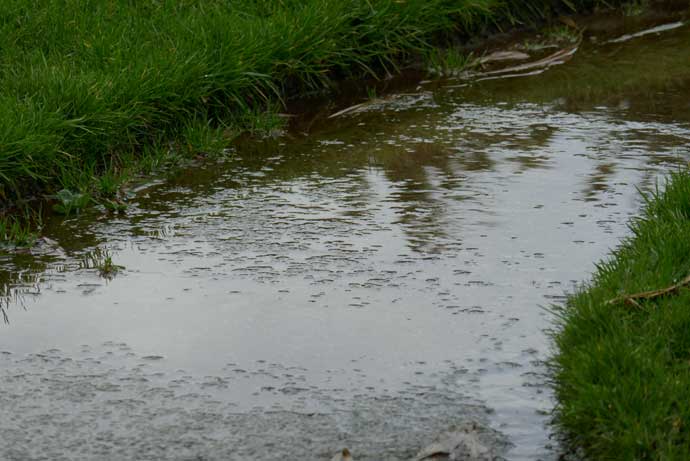
Walk a mile in my shoes, and tell me you don't get your feet wet.

Yes, and there’s “The Profumo Scandal” of the early sixties, in which the Secretary of State for War in Harold Macmillan’s government, John Profumo, lied to parliament about his affair with Christine Keeler (who was also involved with a Russian military attache) and was forced to resign. That almost has a contemporary ring, and having just read about the circumstances of their meeting, and their early relationship, I wonder what Facebook would have made of it.
​     Profumo went on to be awarded the CBE for his charitable work, in 1975, and Wikipedia tells me that Margaret Thatcher once described him (in the charitable phase of his life) as a “national hero”. He was present at her birthday party in 2005, apparently. “There are no second acts in American lives,” wrote F Scott Fitzgerald, and these days, it seems that there are no second acts in any lives, particularly those that have been trashed online.
​     Profumo’s disgrace led to a second (British) life, and a fulfilling, useful one at that. All the condemnation, all the rabid monstering, need not be the end. What you survive, and then rise above, finding your own uniquely chastened wisdom on the way, makes you stronger.
​     The curtain can come up again, and won’t we be missing something if we’ve already turned away.


2 Comments

Don't explain it; fix it.

6/2/2018

0 Comments

 
Unequal pay for equivalent work is an outrage. It's not even a gender issue. It's simply wrong. Not fair. If the excuse is some variant on "the system made me do it," the system is wrong and needs changing. If it's a version of "I was only following orders," well, we've heard that before. Cost-cutting, or cost control, or indeed austerity; not one of them justifies breaking the law.
​     Employees are people. Some of them assert themselves more than others - or whatever set of clichés you care to muster. But it's not the job of the employer to get into that kind of sophistry. Once an employee is employed, it's the employer's job to hand out the work, and pay for it fairly once it's done. Explanations for pay inequality, however reasonable they might sound, never amount to more than arguments for disregarding or setting aside or removing whatever obstacle is apparently standing in the way of compliance with the law.
​     I don't consider myself a feminist*. I think life is unfair on all of us, if we choose to look at it that way, but I also think life distributes advantages to each one of us. Not necessarily equally, but that doesn't mean we can't treat each other as equals. I don't consider myself a feminist, but I've surprised myself by getting really, really angry over the latest developments in the equal-pay row at a certain well-known broadcaster - and now, elsewhere as well. This issue is gaining momentum. Unequal pay is just not fair.

​*Not sure that I remember this correctly (corrections welcome). When Malcolm X was asked why white people couldn't join the Black Power movement in the sixties, he replied that coffee was stronger without milk. His larger point was that some allegiances have to be lived to be truly shared. They have to be felt, and sympathising isn't the same as belonging. Fairness, or the lack of it, can be felt. That said, I'm not the masculine equivalent of "feminist" either, there isn't a word for it, because I also have feelings about felt allegiances that divide us. We're people. We should work together. As equals, for equal pay. And if you're still reading after the picture, we come to the further complication that gender is fluid anyway.

Picture
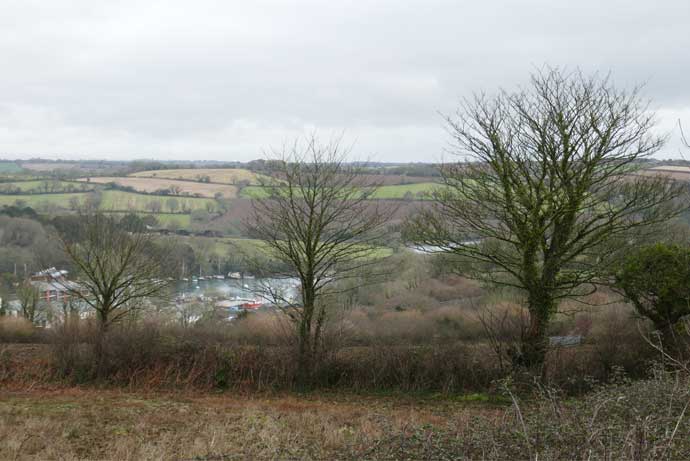
Were these three trees planted at different times? I don't think it's just the perspective that accounts for their different sizes. Why run a hedgerow into the field at that point? I don't remember that it completely cuts the field in two. Is there a mystery to be found in absolutely everything?

Interested to find that the Representation of the People Act 1918 only gave the vote to women over 30 who were occupiers of property or married to occupiers of property ("married", back then, meant married to a man). Surprised to find that the Representation of the People Act 1918 also gave the vote to men over 21 who were not property owners - before 1918, men had to own property to be eligible to vote. The Act gave the vote to 8.4 million women and an additional 5.6 million men (figures from Wikipedia).
​     Before 1918, the situation wasn't that men could vote and women couldn't. Wealthy men could vote, but nobody else could. We might use the term "ruling class" here. I came across this, too. In 1864, Lord Palmerston wrote: "​I deny that every sane and not qualified man has a moral right to vote. What every man and woman too have a right to, is to be well governed and under just laws." Gee, thanks. Palmerston was Prime Minister when he wrote that.
​     Also stumbled across a reference to the Military Service Act 1916, whereby every man from 16 to 41 was "deemed to have enlisted" in the armed forces and so could be carted off to the trenches. Huh! Lots of men not eligible to vote got caught by that one, I guess. With that in mind, I was relieved to discover that there's a consultation due (already under way in Scotland) on reform to the Gender Recognition Act 2004. The idea behind the consultation seems to be that a new Act would "de-medicalise" gender transitions; not sure where I found the term but the point is that you wouldn't have to prove that you've changed.
​     Stonewall proposes an Act that "requires no medical diagnosis or presentation of evidence for trans people to get their identity legally recognised". That's a distinct and bigger issue than me going on about gender-specific legislation, but it does remind me of that enclosure at the Glastonbury Festival a while back, that was restricted to people who "self-identified as women". There's a serious point here as well as a frivolous one, in that we'd get rid of a lot of issues if we could all just self-identify as whichever gender worked in the circumstances.
     Military Service Act? Not me!
     Women and children first? That's me!
​     You're paying how much to men? I'll take it.
​     Men-only dinner? I'll get my party frock.
​     Or maybe not that last one. But wouldn't the world be different, if we could just limit gender to the very few situations in which it really is, ah, worth exploring? And in the rest - stop hurting and bullying each other.
​     If you're still reading after this picture, spoiler alert, we change the subject.

Picture
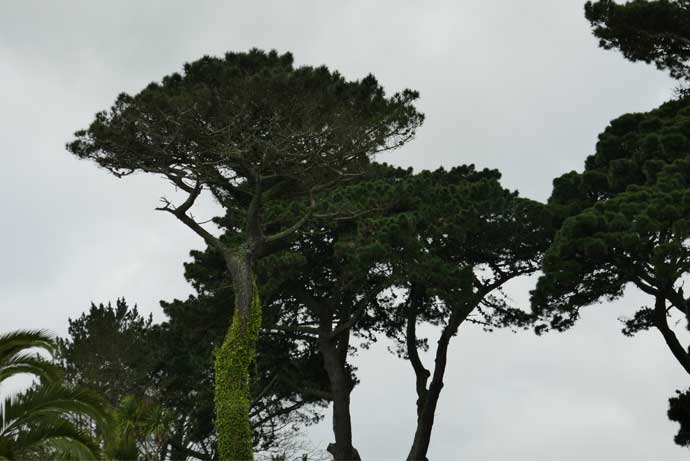
These, I just like the height. And there's something about the way they stand.

It says a lot about today's England that we're even arguing about driving a double-carriageway road through a tunnel under Stonehenge, and building a flyover above the nearest roundabout (a broad summary of the proposal based on a search online). Yes, there's a lot of traffic. But also - yes, there's a lot of archaeology around that site that we've yet to dig up. Think of the generations of ancient people who, I don't know, came by to watch the sun rise. What artefacts (translation: litter, stone picnic cutlery, etc.) did they leave behind?
​     There is a parallel universe in which it wouldn't even occur to us to turn up with plant-hire bulldozers and earthmovers and Portakabin site offices and men in hi-vis jackets and plastic helmets, to start wrecking the place in the name of efficient traffic flow. There wouldn't be a PR agency hired (I'm guessing one has been) to put our releases assuring the media that not damaging Stonehenge is the highest priority of, I don't know, the mysterious entity being paid vast sums by the government to [judging by recent events] go bust half-way through the project leaving a big pension deficit. Nor would campaigners actually have to make the case for not churning up the World Heritage site.
​     In today's England, it doesn't occur to us that we just shouldn't be there. Leave it alone. Is it a calculator or an algorithm that you use to work out the exact minimum tolerance for how close a bulldozer can be driven to the stones without shaking them down?
​     The cinematic reference here might as well be Tobe Hooper's 1982 original Poltergeist, in which (here comes the spoiler) Craig T Nelson grabs the developer warmly by the lapels and says, "You left the bodies, didn't you? You left the bodies and you only moved the headstones. Why? Why?" Maybe the local cinemas should all be playing that when work starts.
​     Although I'm sure it says something about something that when I went online to check the quote, most of the YouTube clips I was offered were titled "Everything wrong with..." Poltergeist and a string of other movies "...in fifteen minutes." Tempted to ask: what's wrong with this picture?  
0 Comments

    Dear Diary: The Archive

    April 2025
    February 2025
    January 2025
    April 2024
    July 2023
    March 2023
    May 2022
    November 2021
    October 2021
    July 2021
    June 2021
    May 2021
    April 2021
    March 2021
    January 2021
    December 2020
    November 2020
    October 2020
    September 2020
    August 2020
    July 2020
    June 2020
    May 2020
    April 2020
    March 2020
    February 2020
    January 2020
    December 2019
    November 2019
    October 2019
    September 2019
    August 2019
    July 2019
    June 2019
    May 2019
    April 2019
    March 2019
    February 2019
    January 2019
    December 2018
    November 2018
    October 2018
    September 2018
    August 2018
    July 2018
    June 2018
    May 2018
    April 2018
    March 2018
    February 2018
    January 2018
    December 2017
    November 2017
    October 2017
    September 2017
    August 2017
    July 2017
    June 2017
    May 2017
    April 2017
    March 2017
    February 2017
    January 2017
    December 2016
    November 2016
    October 2016
    September 2016
    August 2016
    July 2016
    June 2016
    May 2016
    April 2016
    March 2016
    February 2016
    January 2016
    December 2015
    November 2015
    October 2015
    September 2015
    August 2015
    July 2015
    June 2015
    May 2015
    April 2015
    March 2015
    February 2015
    January 2015
    December 2014
    November 2014
    October 2014
    September 2014
    August 2014
    July 2014
    June 2014
    May 2014
    April 2014
    March 2014
    February 2014
    January 2014
    December 2013
    November 2013
    October 2013
    September 2013
    August 2013
    July 2013
    June 2013
    May 2013
    April 2013
    March 2013
    February 2013
    January 2013
    December 2012
    November 2012
    October 2012
    September 2012
    August 2012
    July 2012
    June 2012
    May 2012
    April 2012
    March 2012
    February 2012
    January 2012
    December 2011
    November 2011
    October 2011
    September 2011
    August 2011
    July 2011


No animals were harmed in the making of this website. Other websites are available online (and off). All the content here is copyright William Essex, this year, last year, the year before that and, you guessed it, the year before that, although I don't have the time right now to hunt out that little symbol. This website uses organic ingredients and respects your privacy. Come back some time.

Promoted by T&F CLP on behalf of William Essex at PO Box 16, Jubilee Wharf, Commercial Road, Penryn TR10 8GF.​