William Essex
  • About Us
  • About Me
  • Dear Diary
  • Books (and other stories)
  • This takes you to Medium Dot Com

Out with the new?

28/4/2017

0 Comments

 
Old-fashioned valve radios used to need time to warm up before they got started. Then came transistor radios. You could just switch them on and get music. We'd call them "analogue" now. Then I bought myself a plug-in/battery-operated digital radio with all the trimmings. It has an alarm that wakes me up, et cetera ... the obvious things. I had it next to my bed, plugged in, until I worked out a possible reason why I wasn't getting any sleep: its little blue screen bathes the room in blue light, and isn't blue light the kind of computer-screen light that should be excluded from bedrooms? Apologies to the radio manufacturers if I'm wrong about that. I'm sleeping fine now, thanks.
     I moved the radio to the kitchen. Kept it plugged in but switched off at the socket; no doubt we've all read the articles about global warming - something bad, anyway - being caused by people who waste energy by leaving appliances on stand-by. Yes, It has lots of digital channels; yes, I know that if I ever had five minutes, I could program these numbered buttons to ... and yes, I see how that would be much simpler but ... no, it has never occurred to me that leaving the thing plugged in makes it vulnerable to lightning strikes. Kindly leave the page. I kept it switched off, okay? Enough already.
     Thinking about old-fashioned valve radios - as you do - I thought: this digital thing's the same. I turn it on at the socket, and then I have to wait until it's sorted out what time it is before I can switch it on. Then it takes a while (a digital while, in the sense that digital technology has made us impatient with even the smallest delays) to tune itself in. Then it's a radio. A slow one, though. When I actually want to listen to the radio, I use a small analogue thing that I bought for £6.99 - seven pounds - from PC World a month or so back. I've noticed that the pips come earlier on the analogue radio than on the digital one. The point of the pips is to mark the hour, right? Mark it exactly?
     Oh, never mind. I wonder whether the period between valves and digital will turn out to have been an aberration - in which we went to the moon, innovated in art, music, culture, blah blah - a post-war aberration, a time of (let's call it) creative tension and real cold-war danger, while everything since the invention of the internet will turn out after all to have been a return to the historical norm in which nothing much changes for centuries. Because we can't do much these days, can we? Everything costs Billions, with at big plosive capital B, and every cost is there to be cut. We can measure every problem and post about it, but, y'know, doing stuff is, like, difficult.
     Way back a long time ago, December 2011, the magazine Vanity Fair published the article So You Think You Want A Devolution? by Kurt Andersen. Worth reading, as is much of the reaction you'll find if you put the article's title into a search engine. Andersen kicks off with the observation that fashion changed rapidly back in the transistor age - every decade had its distinctive style - but these days, not so much. We did all that innovative, edgy, clever stuff - went to the moon with no more computing power than you'd find on the back of a cereal packet; went from Woodstock to punk - and now we're back down to tinkering around with our digital selfies.
     "What did you wear in the seventies, Daddy?" A question I hope I never have to answer. "What did you wear ten years ago, Daddy?" Easier.
Picture
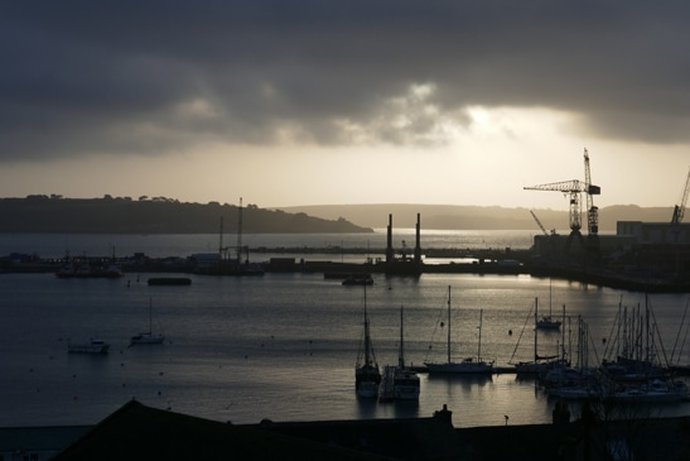
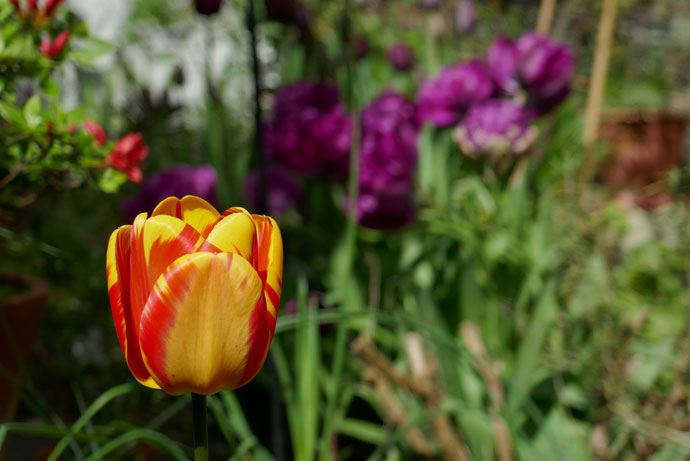
I wonder why I took this photograph. I think it was the light.
0 Comments

April 27th, 2017

27/4/2017

0 Comments

 
Picture
Turned out nice again. Happy Thursday.
0 Comments

Participant observers?

18/4/2017

0 Comments

 
That's interesting. I've now spent several weeks putting out a piece every Saturday on the macro-dramas of that week. Trump, of course; Brexit, of course; Gibraltar, not quite of course; United Airlines – oh. How surprising was that? Exactly? Redundant emphasis word to ram the point home; tell me exactly how surprised you were that the operational ends of big corporate entities - the over-mighty subjects of our day - don't invariably follow through on the love and attention exhaled by their marketing departments.
     My numbers went up, if we're interested in numbers, but only because I semi-accidentally hit 'share' rather than 'don't share' with one piece, and that put it out on Facebook. But the main takeaway from all that incredibly hard work (it's a given these days that we all claim to work “incredibly hard", right?) was … how very quickly everything submerges again. Remember Gibraltar? There was talk, a fortnight ago, about going to war with Spain over the Rock. Now, there isn't. [No, please, I don't have to mention the UK general election yet, do I?]
     Nothing goes away – in the real world, Gibraltar's still mentioned in the EU draft; that carrier group is getting ever closer to the Korean Peninsula, or maybe it's arrived; the good doctor is still recuperating – except that it does go away. It's all still happening, nothing has happened to make any of it less (or more) panic-worthy, but the butterfly mind has moved on. There's footage to share on every one of last week's big stories – even helicopters circling round the carrier fleet now (then), filming – but the novelty's gone. We were really, really bothered; now we're ... not.
     Life is a box set. Yes, there's a cliff-hanger at key moments in every episode, where the ad breaks go, but there are also the flat bits that follow. Occasional story-lines do endure beyond a single episode, but the detail gets lost: that vote last year has given us a homogeneous mass of “brexiteers” around whom the assumptions coalesce into a form of truth: they're disaffected manual workers with limited education and strong views on immigration. With the detail goes any sense that there might be more to know.
     To borrow from Andy Warhol, it's as if we've adapted to the news cycle by taking everything seriously for fifteen minutes. Which is not the same as realising that it's really real. Maybe there's a group of scientists out there who could do a study on the panic-centres of the brain: our grand(?)parents responded to the Cuban Missile Crisis with this little grey bit here, and to the bit where Gary Cooper goes out alone in High Noon with this highlighted orange bit here. But we spark up the same pretty pattern whether it's the tree collapsing in Avatar or Trump dropping that bomb (remember?). It's as if there's the real world, in which things happen, and there's the expression of human nature that we mistake for reality.
     Shall we try to explain this by imagining that we're animals adapting to an environment? Look around you. It's not just trees, buildings and building sites, advertising, crowds of strangers and traffic noise, it's 24-hour news, pervasive storytelling, too many inputs. It's everything including the "tone of voice" of the news. Everything is serious and everything has an equal weight. [I know; I'm continuing the theme from last week.] We've tuned ourselves into a mass - panic? hysteria? - into a mass *something genuinely felt, genuinely depressing/alarming but also fleeting; there'll be a word for it soon, probably long and composite and not in English* that feeds on whatever happens to be happening at any given moment. It's as temporary as fight or flight. We're already wired; we're taking another jolt from whatever headline comes next. Not the same as reacting appropriately to a surprising event. It's an adaptation to something pervasive in our environment.
     The cumulative element, the build-up in the collective unconscious, is a function of that erosion of detail. We're left with an accelerated heart rate and a non-specific sense that everything's going wrong; that life's out of kilter; even, perhaps, a sense of grievance - a sense that there's an enemy. If there are “brexiteers” messing up the country; if (in that recurring but odd choice of verb) the EU is going to “punish” us for voting to leave; if Trump's every move is axiomatically bad and the adherents of a certain religious tradition are all terrorist sympathisers; it follows that there are “bad guys” working against us.
     The picture is simplified: where there were shades of grey, there's now black and white.But who are these bad guys? In Crowds and Power, Elias Canetti writes: “It is always the enemy who started it, even if he was not the first to speak out, he was certainly planning it; and if he was not actually planning it, he was thinking of it; and, if he was not thinking of it, he would have thought of it.” That kind of enemy arises from our reaction - from the way we have adapted to the world around us - and is not some kind of a bizarrely omni-competent malign entity who has somehow contrived every news headline of the past month. We don't have enemies because we have enemies; we have them because that's how we see the world.
     We're okay. We're still here. The sky outside the window is overcast, which messes up my punchline, but the tulips are in bloom and the birds are flying. If not today, then some other time, the sun will come up, and my various screens can all be switched off. Chop wood. Carry water.

Picture
Every picture tells a story. What's this one telling you?
0 Comments

We've named the storms...

14/4/2017

0 Comments

 
 We had a good week here in Falmouth, weather-wise, and the forecast for the long weekend is: lots of visitors. At some point, I'm going to nip up and photograph the tulip beds in Kimberley Park. There was a cruise ship in yesterday, just for the day, and I've seen gig crews doing their thing. Sea as bright as the sky. At 6am one morning, maybe Thursday, I came across a group of women exercising between the Jacob's Ladder steps and the benches on The Moor. Various stretches, then up and back down the steps, one at a time. There's always a busy feel at that time of the morning, with the cleaning crews and the various delivery trucks.
     Okay, yes, I know. There were reports that a US battle fleet / carrier group / carrier was moving towards North Korea. There was the story about the doctor who was dragged off a United Airlines flight. Big, reportable things happened. For me, the week began at 0845 local time on Sunday 9th April (last Sunday, yes, but I'm trying to write in a "serious news" tone of voice), when the writer and performer A L Kennedy delivered BBC Radio 4's A Point of View ten-minute(ish) opinion piece. Kennedy's title was 'Bad News Is Good Business' and her theme was that the news industry is competitive so that the news itself has to be big, bad and attention-grabbing. Still available as a podcast, I imagine.
     Storms even have names now, and they're never downplayed. There's never a day on which nothing much happens - and conversely, everything that happens is given the same (heavy) weight. The other characteristic of modern news-gathering is the extent to which we respond to absolutely [expletive deleted] everything by discussing it. I haven't checked, but I suspect that most of the terminology of Brexit, for example - hard, soft, in this, out of that - originated in the course of discussion rather than as stated government policy. We are indeed making it all up as we go along. And the biggest fiction of all is that today's event, whatever's just happened, is the thing that matters most.
     We're giving meaning and structure to our lives by scaring ourselves. Ho hum. For me, the detail is also thought-provoking - more so, in fact. This week, the US president came out and praised the chocolate cake he was eating when he told China's leader that he had just launched a missile attack on Syria. Keeping the staff happy? That makes sense in a hotel business, I suppose, and perhaps in a White House - imagine the presidential cake-maker fending off interview requests (and the retired kremlinologists poring over future tea-time menus). Imagine also Trump's likely treatment of other key personnel. Then a spokesperson for the Chinese government was quoted as saying that President Trump would no longer be regarded as a "paper tiger". Message received, right? Staff happy; rival enterprise ... he's got their attention.
     Then Trump dropped a MOAB on Afghanistan. If there's a language of bombs in the same way that there's a language of flowers, a Massive Ordnance Air Blast bomb is an emphatic statement, especially if it's delivered after a bouquet of cruise missiles. But - is it me, or is there a slight glitch in the US government's historical memory? Yes, the MOAB also works out as the Mother Of All Bombs. But, just as Saddam's statue didn't collapse as completely as Ceausescu's, so the obvious inspiration/precedent for that nickname - the Mother Of All Battles - rather fizzled out. Mind you, the North Koreans now seem to be re-enacting a soviet-era military parade in whatever their equivalent of Red Square is called, so maybe they're not big on historical precedents, either. Peaceful collapse, right, wall came down, crowds flooding across to the prosperous South - er, West, sorry. West. I'm talking about eastern Europe when the wall came down, not ... not anything else.
     Oh - the statue thing? Big spontaneous Romanian mob attached ropes and pulled, and their former dictator's statue collapsed into dust and rubble on live TV. US military staged a similar photo opportunity a few years later, but Saddam's statue was more sturdily built. He must have seen them coming, ha ha. News - events, rather - are not easily managed. Nor do events become news without help; you have to add the significance. And I suppose what that means is, the easy option is to buy the sizzle, or at least go along with it. Sometimes, going along with, say, the naming of storms requires a suspension of disbelief (on both sides of the screen) even as it enables a certain tone of voice. Forget the actual wind speed; the thing has a name and it's getting closer. Start talking. Look serious. Use the name. You in the audience - get on Facebook.
     Still, never mind. Saturday's shaping up to be a sunny day. Rain in the air first thing, but it's brightening up. The radio's on about the possibility of somebody dropping a big bomb on somewhere. That line attributed to Mark Twain - history doesn't repeat itself, but it rhymes - came up the other day, but I think we worry in blank verse. Yes, we have an unpredictable world leader who has proven himself capable of dropping bombs. Yes, the "he might drop a bomb" discussion will attract an audience. But think about the strategic calculation that the Chinese are making: Trump's not a paper tiger, and he's focused on a rogue state that they also find problematic. North Korea is reliant on large inflows of aid from China, I believe. Send in the kremlinologists - oh sorry, they're already here.
     These days, the lessons of history - those precedents - aren't scary enough. Maybe the lessons of fiction would be more in tune with the way we think now. Years ago, many years ago, I read the thriller On The Beach by Nevile Shute. Maybe I'll look it out. Given where I'm likely to be this afternoon, maybe that would be just the book to have tucked into the picnic hamper along with the charcoal and all the other components of the sizzle.

Picture
Come back history, all is forgotten.
0 Comments

Resolve and Peace

5/4/2017

0 Comments

 
So the UK's week began with a former Conservative leader feeding a line to the media. Asked about Gibraltar, Michael Howard cited the Falklands War, and expressed the view that "our current prime minister will show the same resolve in standing by the people of Gibraltar”. If you're too young to remember the Falklands War, the key detail is that the then-prime minister, Margaret Thatcher (commonly known these days as just Thatcher), reacted to Argentina's military invasion of the Falkland Islands by sending a military "task force". What? The Falklands? Look at a map. Of course they're British!
     So this was an ex-leader of the "Nasty Party", a man once described by a rival as having "something of the night about him", calling for resolve in the face of a draft EU document pointing out that Gibraltar's position would be distinct from the UK's in the forthcoming Brexit negotiations. Omitting the detail, because life is too short (and I've forgotten most of it), and not getting into why it was felt necessary to spell this out in a draft document, this is a statement of fact. Gibraltar is inside this and outside that, and blah blah, whatever, not the same as the UK. Various other politicians gave interviews over the weekend.
     Monday's (and late Sunday's) news was full of Michael Howard's call to war. Tim Farron, leader of the de-facto parliamentary opposition in the UK, came up with this: “It is unbelievable that within a week of triggering article 50 there are conservatives already discussing potential wars with our European neighbours." There was widespread outrage, of the kind that fills valuable airtime and column inches in a voraciously round-the-clock news cycle. It was as if Jeremy Corbyn had come out in favour of the Trident nuclear deterrent and said that he'd use it on the rest of the Labour Party. We all kept very straight faces while taking jolly seriously the notion that Michael Howard's reference to the past could be taken as a reliable indicator of a likely future. Ceuta came into the story on Tuesday, by which time the Spanish were laughing the whole thing off.
     We all need a story to emote over, don't we? And to fill airtime. Out of curiosity, I watched the interview on YouTube. Even the interviewer doesn't pick up the supposed reference to war. Mr Howard says his thing, and Sophy Ridge moves on to something else. I read some of the follow-up coverage, on paper as well as online, and was relieved to find that at least somebody - Channel 4 News - had asked the follow-up question. Was he really calling for war? "Of course not," said Michael Howard. Amazing how much space you can fill with a non-story, isn't it?

In other news...

In South Africa, President Jacob Zuma tried the move that didn't work for UK prime minister Harold Macmillan back in the early sixties, by dismissing nine key members of his government including the finance minister. Standard & Poor's downgraded South Africa's credit rating to junk status. In the US, Donald Trump made various noises. I have developed a kind of synesthesia about Donald Trump. Every time I hear him say something big and tough - he's going in single-handed this time to sort out North Korea, I think - I see a wasp, buzzing loudly and threatening to sting just as soon as it gets itself unglued from the flypaper on which it's landed. Checks and balances. [I take some of that back. See below.]
     Maybe the lesson of it all is that a mature democracy is more than just people voting - it's the system that keeps everything more or less stable regardless of how self-interestedly (or well-informedly, or credulously) people vote. Wednesday morning, Radio 4 brought the news, first, that Theresa May had suggested that free movement of EU citizens would continue for some time after Brexit, and secondly, that somebody on the EU side - forget who, sorry - had suggested that the UK would have to conform to EU regulations, just as it was doing now, to receive all the various privileges, et cetera, of EU membership even after it had ceased to be a member.
     Brexit's going to be an anti-climax, isn't it? After so much hot air and emotion, it can hardly fail to be an anti-climax, I know, but I mean, even more of an anti-climax. Most likely outcome: stability is restored and the UK finds itself in a relationship with the EU that feels oddly familiar. And maybe the US system will turn up a fresh and credible alternative candidate in three rather than seven years. There are lessons to be drawn from the current catharsis in the US, but one of them is not: the system doesn't work. Let's hope that South Africa's relatively young democracy also passes the test its president has set for it.   

And finally...

So the world's week ended with a US missile strike on a Syrian airbase. Didn't see that coming. There is a red line, or a line in the sand, or whatever it's called, after all. Not sure whether the President gave the order while still playing host to the Chinese leader, but if so, I'm sure their conversation went with a zing after that. My memory of the week will now be Trump's oddly soft voice delivering the news that "even beautiful babies" were murdered in the chemical attack.
     The US domestic agenda doesn't seem to be getting any less adhesive, but presidents have more freedom to act on foreign-policy issues, I believe. Can't decide whether to dig a nuclear shelter in the back garden, or to take my copy of Machiavelli's The Prince out to the deckchair, and start leafing through for something quotable on what it means for a leader to demonstrate (1) a willingness to act, and (2) a measure of unpredictability, and perhaps also (3) the range of character quirks that we've come to associate with Donald J Trump.
     Although I don't suppose even Machiavelli would have foreseen...
     Nuclear shelter it is. 

Picture
Colour picture. Sun's in there somewhere.
0 Comments

    Dear Diary: The Archive

    April 2025
    February 2025
    January 2025
    April 2024
    July 2023
    March 2023
    May 2022
    November 2021
    October 2021
    July 2021
    June 2021
    May 2021
    April 2021
    March 2021
    January 2021
    December 2020
    November 2020
    October 2020
    September 2020
    August 2020
    July 2020
    June 2020
    May 2020
    April 2020
    March 2020
    February 2020
    January 2020
    December 2019
    November 2019
    October 2019
    September 2019
    August 2019
    July 2019
    June 2019
    May 2019
    April 2019
    March 2019
    February 2019
    January 2019
    December 2018
    November 2018
    October 2018
    September 2018
    August 2018
    July 2018
    June 2018
    May 2018
    April 2018
    March 2018
    February 2018
    January 2018
    December 2017
    November 2017
    October 2017
    September 2017
    August 2017
    July 2017
    June 2017
    May 2017
    April 2017
    March 2017
    February 2017
    January 2017
    December 2016
    November 2016
    October 2016
    September 2016
    August 2016
    July 2016
    June 2016
    May 2016
    April 2016
    March 2016
    February 2016
    January 2016
    December 2015
    November 2015
    October 2015
    September 2015
    August 2015
    July 2015
    June 2015
    May 2015
    April 2015
    March 2015
    February 2015
    January 2015
    December 2014
    November 2014
    October 2014
    September 2014
    August 2014
    July 2014
    June 2014
    May 2014
    April 2014
    March 2014
    February 2014
    January 2014
    December 2013
    November 2013
    October 2013
    September 2013
    August 2013
    July 2013
    June 2013
    May 2013
    April 2013
    March 2013
    February 2013
    January 2013
    December 2012
    November 2012
    October 2012
    September 2012
    August 2012
    July 2012
    June 2012
    May 2012
    April 2012
    March 2012
    February 2012
    January 2012
    December 2011
    November 2011
    October 2011
    September 2011
    August 2011
    July 2011


No animals were harmed in the making of this website. Other websites are available online (and off). All the content here is copyright William Essex, this year, last year, the year before that and, you guessed it, the year before that, although I don't have the time right now to hunt out that little symbol. This website uses organic ingredients and respects your privacy. Come back some time.

Promoted by T&F CLP on behalf of William Essex at PO Box 16, Jubilee Wharf, Commercial Road, Penryn TR10 8GF.​